If you’re reading this, you’ve probably seen a Standard Bag somewhere—maybe stacked on a warehouse pallet, tucked under a store checkout counter, or rolled out at a job site. For decades, these bags have been a workhorse of supply chains, retail operations, and industrial sites, prized for their affordability, consistency, and widespread availability. As someone who’s spent the last eight years as a Standard Bag supplier, I’ve heard every pitch, every question, and every frustration from clients who rely on these products daily. Today, I want to cut through the marketing hype and talk about the hard, honest limitations of a Standard Bag—limitations that every buyer, whether you’re a small boutique owner or a large-scale logistics manager, needs to know before you place your next order. Standard Bag
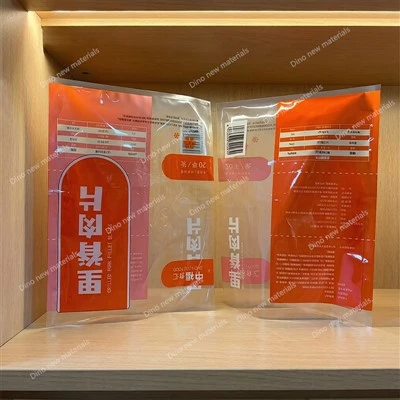
Let’s start with what a Standard Bag is, for anyone new to the conversation. For our team, a Standard Bag refers to a mass-produced, off-the-shelf flexible container—usually made of polypropylene, polyethylene, or a blend of both, with a standardized size, weight capacity, and feature set. They’re designed for one core purpose: to perform a basic function (holding goods, protecting them from light dust, making transport easier) at the lowest possible cost. That’s their superpower, but it’s also the root of their biggest limitations.
The first and most obvious limitation is size rigidity. When you order a Standard Bag, you pick from a finite list of measurements—say, 18×12 inches, 24×18 inches, or 40×60 inches for bulk industrial versions. There’s no flexibility here. If your product is 1 inch too wide to fit the standard 18×12 retail bag, or you need a 3-inch taller bag to accommodate extra packaging, you’re out of luck. We’ve had clients come to us after wasting thousands of dollars on standard bags that don’t fit their products: a craft brewery trying to package custom-sized beer cans, a hardware store with over-sized garden tools, a food producer with specialty bulk grains that require more space than a standard bag’s interior can offer. Custom sizes are an option, but that’s not a Standard Bag anymore—it’s a custom bag, and it comes with lead times and costs that undercut the whole reason people buy standard in the first place.
Then there’s weight and load capacity. Standard Bags are engineered for a narrow weight range. The average retail standard bag can hold up to 50 pounds, but push that to 55 pounds, and you’re asking for trouble—seams can burst, handles (if they’re reinforced to begin with) can pull free, or the material can stretch so much that the product inside becomes damaged. Industrial standard bags fare a little better, with some rated for up to 1,500 pounds for bulk powders, but even here, there’s a ceiling. We had a client last year who was using standard bulk bags for wood pellets, and they kept having failures during transport: the bags would split at the bottom, spilling pellets across warehouse floors and adding thousands of dollars in lost product and cleanup costs. Their mistake? They were using a Standard Bag rated for 1,200 pounds for a load of 1,400 pounds. The material thickness, stitch strength, and structural design that make a Standard Bag cheap just don’t hold up beyond its intended load limit. Unlike custom bags, which can be reinforced with thicker material, double-stitched seams, or reinforced loop handles, Standard Bags have one fixed design that works for the average use case, not the extremes.
Environmental performance is another area where Standard Bags fall short, and this is a point that’s become non-negotiable for so many clients in the last five years. Let’s break this down: first, moisture resistance. A standard poly bag is great for light dust, but leave it out in rain, or store a product that’s even slightly moist, and the bag can become permeable. We’ve had produce suppliers tell us standard bags cause their leafy greens to wilt faster; chemical manufacturers say standard bags don’t prevent small amounts of moisture from seeping in and compromising their raw materials. If your operation is working with products that require moisture barrier, UV protection, or temperature stability, a Standard Bag just can’t deliver. The additives used in standard bags are kept to a minimum to cut costs, so there’s no extra UV stabilizer for outdoor storage, no aluminum layer for moisture resistance, no coating to block chemicals or oils.
Then there’s recyclability, or lack thereof. Most Standard Bags are made from a mix of low-density polyethylene (LDPE) and linear low-density polyethylene (LLDPE), which are recyclable, but only if they’re clean and not mixed with other materials. A standard plastic retail bag, for example, often has a thin paper or printed label that can’t be easily separated, making it harder to recycle. What’s more, many standard bags are designed for single use, so even if they’re recyclable, the incentive to reuse them is low. We’ve had clients in the retail and food sectors get flagged by customers for using single-use standard bags, and even hit with local waste regulations that require them to switch to more sustainable packaging—something a Standard Bag, by design, can’t easily adjust to.
Durability for heavy-duty or rough-use applications is another key limitation. Standard Bags are built for consistent, gentle handling on conveyor belts, in delivery trucks, and in retail backrooms. But what if your work is in construction, mining, or agriculture, where bags are being dragged over rough concrete, exposed to sharp edges, or handled multiple times before reaching their final destination? A standard bag’s thin plastic or weave can tear easily. We had a construction supply client a few months ago who switched to our standard bulk bags for cement, and within a week, they were returning thousands of bags that had torn during loading and unloading at job sites. The standard bag’s material just isn’t thick enough, and its structure isn’t reinforced, to withstand the rough conditions of their industry. Custom bulk bags, which come with heavier weave, reinforced corners, and tear-resistant coatings, are the solution here, but again— that’s not a Standard Bag.
What about branding and customization? I know, I know—standard bags have basic printed labels, but they’re limited. You can’t print a full-color, high-resolution logo on a standard bag without extra setup costs, and most suppliers offer only a few color options, not custom Pantone shades. If you’re a small business that wants a unique bag design to stand out on retail shelves, a Standard Bag won’t cut it. The printing process for standard bags is mass-produced, with large print runs required, so small businesses can’t justify the cost to order just a few thousand units. We’ve had a local coffee roaster come to us wanting to print their custom roaster profile on each bag, but the standard bag’s print capacity couldn’t handle the full design without additional fees that made the total cost far higher than if they’d ordered a custom bag.
Wait, let’s address a common counterpoint: “Why not just use a Standard Bag and make it work?” I hear that all the time. The truth is, for millions of applications, a Standard Bag is perfect. They’re cheap, readily available, and consistent. But for every use case where a standard bag is the right choice, there’s another where its limitations create avoidable costs. I’ve seen clients save a few cents per bag by going standard, only to lose thousands in product damage, labor, and waste when the bags fail. I’ve seen small businesses turn away customers because their standard bags look generic and don’t match their brand. I’ve seen industrial operations miss safety regulations because their standard bulk bags don’t meet the required load or environmental standards.
That’s why, as a supplier, we don’t just sell Standard Bags—we advise clients on when they’re a good fit, and when they need something custom. It’s not about pushing sales; it’s about helping our customers avoid the pitfalls that come with relying on a one-size-fits-all product. For example, a grocery store packing apples: standard 1-pound produce bags work perfectly, cheap enough that even a few hundred torn bags a week don’t add up to a big cost. But a grocery store packing specialty artisanal apples that sell for $5 a pound? A custom bag, maybe with a UV coating to keep them fresh, is worth the extra cost because it protects the product and justifies the higher price point.
The same goes for industrial use: a warehouse storing small hardware parts that only need basic protection? Standard bags work. But a construction company storing steel rebar that needs to be kept dry and free of rust? Custom bags with a moisture barrier are non-negotiable.
So, if you’re in the market for bags right now, take a minute to ask yourself: does a Standard Bag fit my specific needs? Let’s walk through a quick checklist:
- Do my products fit the standard size options, with no extra space needed?
- Does my load weight stay within the bag’s rated limit?
- Do my products not require extra moisture, UV, or chemical resistance?
- Do I need to print a custom design or high-quality branding?
- Are my use conditions (transport, storage, handling) gentle?
If you answered yes to all of these, a Standard Bag is likely the right choice for you. If you answered no to any, that’s where the limitations start to add up.
I’ll wrap this up with a personal note. I started in this industry because I saw small businesses struggling to find packaging that worked for them—either paying too much for custom options or wasting money on standard bags that didn’t deliver. Eight years later, that’s still my priority. Standard Bags are a vital part of the supply chain, but they’re not a magic solution. Their limitations are baked into their design: they’re mass-produced to be cheap, consistent, and easy to stock, which means they can’t adapt to every unique need.

If you’re tired of dealing with torn bags, products being damaged, or generic packaging that doesn’t represent your brand, let’s talk. We can walk through your specific needs, whether that’s a standard bag that fits your requirements or a custom solution tailored to your operation. No sales pitches, no fine print—just honest advice from someone who’s been in this industry long enough to know what works and what doesn’t.
Aluminum Foil Bag References:
- Sustainable Packaging Coalition. (2022). Standard Flexible Packaging: Performance Limitations in Circular Economy Systems.
- Industrial Packaging Association. (2021). Load Capacity and Structural Limitations of Mass-Produced Bulk Bags.
- National Retail Federation. (2023). Consumer Expectations for Packaging: Branding and Environmental Performance Requirements.
- Occupational Safety and Health Administration. (2020). Workplace Hazards of Improperly Rated Flexible Industrial Containers.
Jiangsu Dino New Materials Technology Co., Ltd.
With abundant experience, we are one of the most professional standard bag manufacturers and suppliers in China. We warmly welcome you to wholesale customized standard bag made in China here from our factory. If you have any enquiry about free sample, please feel free to email us.
Address: South of Hangzhou Road and east of Hengshan North Road, Sihong Economic Development Zone, Sihong County, Suqian City, Jiangsu Province, China
E-mail: 19551836609@139.com
WebSite: https://www.jsdinuo.com/
