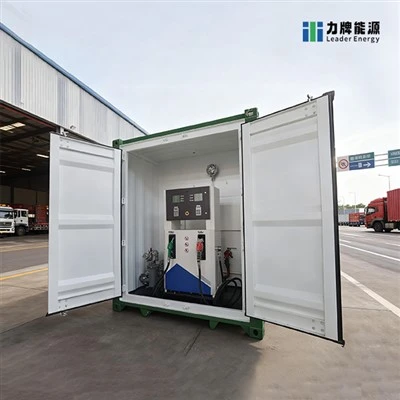
Hey there, if you’ve ever been stuck in a pinch because your business ran out of diesel mid-shift, or your construction site’s fuel tanks were bone-dry right when you needed to power three excavators, you know how frustrating that is. As someone who runs a mobile fuel station supply company (yeah, that’s the gig—we equip and support teams that deliver fuel straight to your doorstep, no more hauling jerry cans or making last-minute runs to a gas station), one of the questions I get asked most is: “How do you actually schedule those deliveries so they never miss the mark?” Let’s break this down like we’re chatting over a coffee, no jargon, just the real nitty-gritty of how we make this work. Mobile Fuel Station
First off, we don’t just wing scheduling—though I’ll admit, when we first started out, we tried. Back in 2019, we’d take calls, jot down addresses and amounts on a scrap of notebook paper, and assign drivers based on who was free that day. Spoiler: that blew up fast. We once sent a driver to a farm 45 minutes away with 2,000 gallons of diesel, only to find out they’d already gotten a delivery from another supplier that morning. Oops. Or another time, a construction site on the north side waited 3 hours because we’d put them last on a route that looped all the way to the south end of town. Lesson learned: scheduling mobile fuel isn’t just about picking a time—it’s about balancing like 10 different factors at once, and we’ve built our system around that.
Let’s start with the core data we collect from customers before we even think about scheduling. When someone books a delivery (we use a simple online form or a quick call, no 20-step process here), we ask two non-negotiable things: how much fuel they need, and their hard deadline. But we also dig for the extra deets that make or break a schedule. Like, is this a recurring weekly fill for a gas station that’s open 24/7, or a one-time fill for an event that starts at 8 AM tomorrow? And where exactly are they? Construction sites, for example, often have restricted access—some only let trucks in after 7 AM, or the entrance is down a dirt road that’s too narrow for our bigger tanker trucks. We also ask about tank levels if it’s a regular customer, because if their tank’s already 80% full, we don’t need to bring extra fuel they can’t store. That data gets logged right into our scheduling tool—nothing fancy, but it’s way better than scrap paper.
Next up, we have to map out our drivers and trucks. We don’t just assign a random driver to a job. Each driver has a known service area—some stick to the suburbs, others handle the rural routes, and a few do long-haul emergency runs. Our trucks, too, have limits: some are smaller (500 gallons) for tight construction site lanes, others are big (10,000 gallons) for bulk orders at warehouses. If a customer needs 8,000 gallons at a warehouse with a big parking lot, we’ll send a full-size tanker with a driver who’s familiar with that industrial park’s access rules—no point sending a tiny truck that has to make three extra trips. That’s a small thing, but it cuts down on delays so much. We also factor in driver shift times—no sending someone who’s clocking out at 5 PM on a 6 PM delivery, that’s a recipe for miscommunication.
Now, the real magic (and the part that took us a year to get right): route optimization. Our scheduling tool isn’t just Google Maps—wait, it does use Google Maps, but we tweak it for our specific needs. Let’s say we have three deliveries: one at a construction site in the west end needing 1,500 gallons, one at a grocery store chain’s back dock in the downtown area needing 2,000 gallons, and a small farm in the east end needing 500 gallons. If we just did a straight line west to downtown to east, that’s a mess. Instead, our tool groups deliveries that are in the same general area, and orders them to avoid backtracking. The farm is a 20-minute drive from the west construction site, so we hit the farm first, then head to the construction site, then downtown—cuts down on total drive time by like 25% compared to a random order. We also account for traffic—every day at 5 PM downtown is a parking lot, so we never schedule a downtown delivery then, unless it’s an emergency (more on that later).
Wait, speaking of emergencies—we have a whole separate slot for those, and it’s not something we jam into the regular schedule. If a local fire department calls at 7 PM and says their backup fuel generator just died and they need 500 gallons tonight, we pull a driver who’s on call and in the area, and adjust their route instead of redoing the whole day’s schedule. Regular customers get priority for their recurring slots, so we don’t mess with their weekly fill times for a non-emergency. That’s a rule we set early on—we’re reliable, so we don’t move a café’s weekly 1,000-gallon fill just because someone wants a delivery for their weekend BBQ.
Another big part: real-time checks. We’re not just setting a schedule and forgetting about it. Every driver has a little tablet in their truck that updates us on their location, and if there’s a delay—like a flat tire on the way to the construction site, or a road closure because of an accident—they text us immediately, and we adjust the schedule right then. If a construction site tells us their tank is already full when we’re 10 minutes out, we can redirect that tanker to another nearby customer instead of wasting the trip. For recurring customers, we also do a quick check 24 hours before their scheduled delivery to confirm everything still lines up—did their project timeline shift? Did they close for a holiday? That little check-in saves so many “wait, why is a truck here?” moments.
Let me give you a recent example to make this real. Last month, we had four deliveries scheduled: a lumber yard needing 3,000 gallons, a housing development under construction needing 2,500 gallons, a school district’s bus yard needing 1,800 gallons, and a small marina needing 700 gallons. All were scheduled for Wednesday morning between 8 AM and 12 PM. Our tool grouped the lumber yard and housing development in the northwest part of the county, the school bus yard was in central, and the marina was southeast. It assigned a driver who knows that part of the county to the northwest jobs, a downtown driver to the school, and a rural driver to the marina. Then, at 7 AM Wednesday, the school district called and said the bus route they use was closed for a parade, so their access time was pushed to 10 AM instead of 8. We adjusted that driver’s route—they dropped off the lumber yard and housing development first (on time), then headed to the school bus yard at 10, then to the marina. No delays, everyone got their fuel when they needed it. If we’d stuck to the original schedule, the driver would have sat around the school yard for two hours, and the marina might have had to wait another day. That’s the kind of on-the-fly adjustment that makes it work.
I also want to mention something we don’t talk about enough: customer feedback loops. Every time a delivery happens, we ask the customer if the time worked for them, if the driver was on time, if the amount was right. That data feeds back into our scheduling tool too. If three different construction sites in the same area always request deliveries before 9 AM, we’ll shift our regular routes for that zone to hit them earlier, instead of making them wait. If a farm always needs their fuel on Tuesday afternoons because their harvest schedule is Tuesday, we lock that in as a recurring slot so it never gets mixed up with other jobs. It’s not a one-way system—we learn from what our customers need, not just what our schedule says.
Wait, and let’s be honest: no schedule is perfect. We’ve had days where a truck breaks down, or a driver calls out sick last minute, and we have to scramble. But that’s why we keep a small reserve fleet of trucks and drivers on call, just in case. We don’t overbook our schedule—we leave about 15% of our capacity open for emergencies or last-minute adjustments, so we never have to turn someone away who needs fuel right away. That’s been key to keeping customers around; no one wants a supplier that’s always “too busy” to help when you need it.
So, to wrap this up, scheduling mobile fuel deliveries isn’t just plugging numbers into a computer. It’s mixing customer needs, driver and truck capabilities, route logic, real-time adjustments, and learning from past deliveries. It’s about being flexible enough to handle the messy stuff—like a parade closing a road or a construction timeline shifting—while still staying consistent for the regular customers who count on us.

If you’re running a business, a construction site, or even a fleet of vehicles, and you’re tired of the hassle of fueling up the old way—waiting in line at gas stations, dealing with supply delays, running out of fuel at the worst possible time—we’re here to take that stress off your plate. We can tailor a fuel delivery schedule that fits your exact needs, whether it’s weekly recurring fills, one-time bulk orders, or emergency on-demand fuel. If you want to chat through what your needs look like, hit us up to connect for a procurement talk.
Fuel Management System References:
- National Association of Fleet Administrators. Mobile Fuel Delivery Best Practices, 2022.
- Journal of Transportation Management. Route Optimization for Last-Mile Fuel Delivery, 2021.
- Small Business Administration. Supply Chain Scheduling for On-Demand Services, 2023.
- Fuel Oil and Convenience Retail Association. Customer-Centric Delivery Scheduling Strategies, 2022.
- International Construction Technology and Innovation Association. Fuel Logistics for Construction Sites, 2021.
Leader Energy Technology (Zhengzhou) Co., Ltd.
As one of the most professional mobile fuel station manufacturers and suppliers in China, we’re featured by quality products and good price. We warmly welcome you to buy durable mobile fuel station for sale here from our factory. If you have any enquiry about customized service and OEM service, please feel free to email us.
Address: No.65, Dongqing Street, Zhengzhou Hi-tech Zone, Henan, China
E-mail: info@leaderdispenser.com
WebSite: https://www.leader-petrol.com/
