When I started out in the high voltage insulators game, I thought “ANSI” and “IEC” were just two random sets of letters thrown around by engineers. Turns out, if you’re sourcing insulators for a grid project, mixing them up is a fast track to headaches—and that’s coming from a guy who’s been selling these things for 12 years. Let’s break down what actually sets ANSI and IEC high voltage insulators apart, no stuffy jargon, just the real stuff we deal with every day. High Voltage Insulators

First, let’s get the basics straight: both are built to stop electricity from jumping where it shouldn’t, right? The difference boils down to who wrote the rulebook. ANSI stands for American National Standards Institute, that’s the U.S. standard. IEC is the International Electrotechnical Commission, basically the global rulebook used in 170+ countries. But it’s way more than just geography—those rules change the entire design, testing, and even installation of the insulator.
I’ll start with ANSI because that’s what most of my North American clients ask about. ANSI insulators are made for the U.S. power grid, which has some specific quirks. For one, their dimensions are super standardized—like, if you need a 110 kV pin-type ANSI insulator, you can swap it with another brand’s same number and it’ll fit on the crossarm no questions asked. That’s a big deal for utilities, which don’t have time to rework every pole because a replacement doesn’t line up.
Testing? ANSI’s tests are brutal, tailored to North American weather. I’ve seen ANSI insulators go through thermal cycling: they heat them up to 130°F, then drop ‘em to -40°F, 100 times over. That’s because a lot of the U.S. has extreme temps—like Minnesota winters or Arizona summers. They also do a “porcelain glaze adhesion” test that’s stricter than IEC’s, because salt and grime on roads can eat away at the glaze over time, and utilities need insulators that won’t fail mid-storm.
Then there’s the voltage rating labeling. ANSI lists voltage in terms of “nominal system voltage,” but they also specify what’s called “BIL”—Basic Impulse Level. That’s the peak voltage a surge (like from a lightning strike) can hit before the insulator breaks down. For example, a 115 kV ANSI insulator has a BIL of 550 kV. That’s non-negotiable for U.S. utilities—if you get an insulator with the wrong BIL, lightning will punch right through it, and you’re looking at hours of downtime.
Now IEC insulators—those are for the rest of the world, and let’s just say their rulebook is more flexible for regional conditions. IEC doesn’t lock in exact dimensions as tight as ANSI does. Instead, they use “design parameters” that let manufacturers tweak things for local weather. For example, in Southeast Asia, where monsoons and salt air are a big problem, IEC might specify a longer “creepage distance” (that’s the surface length the electricity has to travel to jump from the top to the bottom of the insulator) to prevent flashover. In the U.S., we rarely need that much creepage, so ANSI insulators are cheaper and lighter—perfect for the dry, continental climate.
Wait, but that flexibility can be a downside if you’re not paying attention. IEC’s BIL rating isn’t standardized the same way ANSI’s is. An IEC 123 kV insulator might have a BIL of 550 kV or 650 kV, depending on the manufacturer. That’s a problem for utilities who are used to consistent ratings. I’ve had a client in Canada once try to use an IEC insulator on a transmission line, and they ended up having to replace all 200 units because the BIL was too low for their area. Lesson learned: never mix standard sets without checking specs.
Material differences are another big one. ANSI porcelain insulators—most of what we sell in the U.S. is porcelain. It’s durable, cheap, and easy to mass produce, perfect for the grid’s high-volume needs. IEC insulators, though, are often a mix of porcelain and composite materials (like silicone rubber). Why? In parts of Europe and Asia, where pollution is worse (industrial smoke, desert dust), composite insulators repel water and grime way better than porcelain. So they don’t need as much cleaning, which saves utilities money in the long run. But here’s the catch: composites degrade faster in UV light, so if you put an IEC composite insulator in Arizona’s sun, it’ll crack in 5 years, whereas a porcelain ANSI will last 30+. That’s a mistake I see new overseas clients make all the time.
Installation is another area where they’re different. ANSI pin-type insulators are threaded directly onto the crossarm—you just need a wrench, easy to replace in the field. IEC insulators, especially the long ones for transmission lines, use end fittings that clamp onto the conductor, so installation requires special tools. That’s why U.S. line workers usually stick with ANSI—they don’t want to carry a whole new set of tools for a job.
Cost? Let’s be real, that’s what everyone cares about. ANSI insulators are cheaper for North American projects because they’re mass produced to tight specs—manufacturers can run big batches, so per-unit cost is low. IEC insulators for regions with harsh environments (high creepage, composite) cost 20-30% more than equivalent ANSI ones. But if you’re in a place like Singapore, that extra cost is worth it—you won’t have to replace them every 10 years.
Wait, let’s clear up a common myth: IEC isn’t “worse” than ANSI, and vice versa. They’re built for different jobs. Last year, I had two clients on the same continent—one in Iowa, dry, flat, low pollution, went with ANSI porcelain. Another in Florida, near the coast, salt air, went with IEC composite. Both worked perfectly for their needs. I think a lot of engineers get tripped up by thinking one is a global standard, but it’s not—ANSI is regional, IEC is international but flexible.
Another thing: certification. To sell ANSI insulators in the U.S., they have to pass testing at labs like ANSI-accredited facilities. You can’t just make a porcelain insulator and call it ANSI. For IEC, certification is more regional—like, if you’re selling in Germany, you need VDE certification, which aligns with IEC, but it’s not the same as ANSI’s stamp. So when clients order online, they sometimes get scammed with “ANSI” insulators that haven’t been tested—we see that all the time, and those fail way faster.
Let me give you a real example. A mid-sized utility in Texas reached out to me last year. They had a line that kept having flashovers after a new housing development was built nearby—lots of road salt and dust blowing onto the poles. They originally ordered ANSI porcelain insulators, but they were failing twice a year. We suggested switching to IEC insulators with higher creepage distance, made with a porcelain-silicone blend. Now, two years later, they haven’t had a single failure. That’s the sweet spot: matching the standard to the environment.
What’s the biggest mistake I see people make? Thinking they can swap. I had a client in Mexico try to use ANSI insulators for a mountain line with heavy fog. The creepage distance was too short—they got flashovers every week. Once we swapped to IEC’s 170 creepage rating, it fixed. But it cost them a few extra thousand dollars, which they didn’t budget for. So always check the local requirements before ordering.
Now, for the other side: if you’re working in the U.S., don’t waste money on IEC insulators unless you’re in a high-pollution or coastal area. ANSI is made for your grid, cheaper, easier to install. If you’re anywhere else, IEC is the way to go, but make sure you’re getting the right creepage and BIL for your climate.
At the end of the day, as an insulator supplier, my job isn’t to push one brand or standard—it’s to match what you need. I’ve sold both ANSI and IEC, and I’ve seen what works when it does, and what happens when you mix and match wrong.
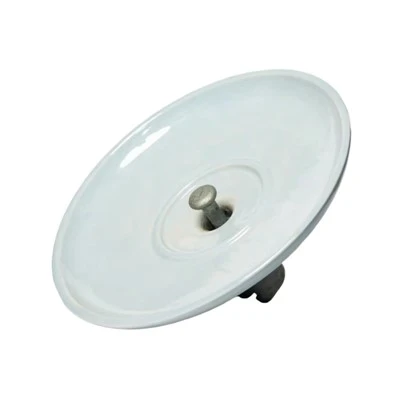
If you’re planning a new line, replacing insulators, or just have questions about which standard fits your project, hit us up to talk through it. We’ll give you the straight scoop, no sales pitch, just what you need to keep your grid running.
High Voltage Insulators References:
- ANSI C29.2, American National Standard for Porcelain Insulators for Overhead Lines
- IEC 60305, Insulators for Overhead Lines — Characteristics, Test Methods, and Acceptance Conditions
- IEEE Std 450, Guide for Maintenance, Operation, and Replacement of Insulators for Overhead Transmission Lines
- International Electrotechnical Commission (IEC), 2023 Global Insulator Standard Application Report
- North American Electric Reliability Corporation (NERC), 2022 Overhead Insulator Failure Analysis Report
Chongqing Pigeon Porcelain Insulator Co., Ltd.
As one of the most professional high voltage insulators manufacturers and suppliers in China, our products have good reputation in the market. Please feel free to buy durable high voltage insulators at competitive price from our factory. Good service and quality products are available.
Address: No.10, Hequan North 1st Road, Yanjia Industrial Park, Changshou District, Chongqing, China
E-mail: cqdc2006@163.com
WebSite: https://www.gpdcinsulators.com/
