If you’ve ever walked the floor of a manufacturing plant that produces electrical components—say, a line of power cords for kitchen appliances, or printed circuit boards for medical devices—you’ve probably seen a Hipot tester in action: a bulky, tabletop unit with a dial, a set of test leads, and a warning label in big red letters that says “HIGH VOLTAGE.” For the uninitiated, it looks like something out of a spy thriller, not a critical quality control tool. One of the most common questions I get from customers, both new and veteran, is a simple one: “What’s the maximum voltage your Hipot tester can put out?” It sounds like a straightforward query, but the answer’s not as cut-and-dry as you might think. Over 15 years in the Hipot tester industry—first as a field technician, now as a supplier working directly with engineers and production managers—I’ve learned that the maximum output isn’t just a number on a spec sheet; it’s tied to what you’re testing, why you’re testing it, and how you’re putting that voltage to use. Let’s break this down, because getting it wrong can mean a faulty product reaching the market, or even a production line shutdown that costs thousands in lost time. Hipot Tester
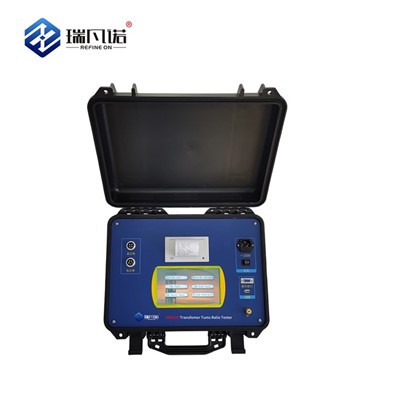
First, let’s get clear on what a Hipot tester does, at its core. The name stands for “high potential,” and its job is to verify the insulation between two conductors in a device is strong enough to withstand much higher voltage than it will ever see in normal use. That’s not just a random overvoltage; it’s a standardized stress test designed to catch manufacturing defects—tiny gaps in insulation, nicks in wire coatings, or even missing layers of plastic that can turn a safe device into a shock hazard or a fire risk.
Now, to the maximum voltage question. Most of our standard production-grade Hipot testers top out at 5,000 volts AC and 6,000 volts DC. That’s a solid number for the vast majority of applications we see: consumer electronics, power tools, household appliances, even small industrial control panels. But I’ll be the first to tell you, that’s not the end of the story. We have specialty models that go higher—much higher. For customers working on high-voltage components, like EV traction batteries, power transformers, or medical imaging equipment, we can build units that output up to 50,000 volts AC and 70,000 volts DC. I remember a conversation two years ago with a team at a company making 1,000-volt battery packs for electric forklifts. They came to us because their standard tester couldn’t push enough voltage to properly test the insulation on their high-voltage cables. Their old unit maxed out at 5,000 volts, which was too low to simulate the stress of a short circuit or insulation breakdown at their operating voltage. We worked with their engineering team to custom-build a Hipot tester with a 30,000-volt output specifically for their line, and that unit’s been running for two years without a single issue. That’s the thing about maximum voltage: it’s not a one-size-fits-all number. It depends entirely on your test requirement, and that’s where a lot of suppliers drop the ball—they’ll just push their highest stock number, not ask the right questions about what the customer actually needs.
Let’s talk about the difference between AC and DC maximum voltage, too, because that’s another point of confusion. A lot of people assume higher voltage is always better, but AC and DC serve different purposes in Hipot testing. AC Hipot tests simulate the actual alternating voltage the device will encounter in normal operation, which is why it’s the standard for most consumer products. DC, on the other hand, is used to test for insulation resistance and to catch subtle defects that AC might miss—tiny pinholes, for example, that wouldn’t arc over at AC voltage but will break down under DC’s steady, constant potential. So our DC maximum voltage is almost always higher than our AC maximum voltage, and that’s not a flaw in the design; it’s a feature, tailored to how each test works. For that same forklift battery customer, we actually set the DC output at 35,000 volts, even though their AC test only needed 30,000. That’s because their test plan required both, and the DC level needed to be high enough to detect microdefects that could cause failures in the field.
But here’s a critical caveat that every customer needs to understand about maximum voltage: it’s not just about the output of the tester. It’s about the load the tester can handle, too. A 5,000-volt Hipot tester might sound impressive on paper, but if it can only deliver a tiny amount of current at that voltage, it’s useless for testing large components—like a 10-foot power cord for a commercial oven, or a large transformer with thick insulation. Those components have a larger capacitance, which means the tester needs to supply enough current to charge that capacitance to the test voltage, otherwise you’ll get a false failure. I once had a customer who bought a budget 5,000-volt Hipot tester from a overseas supplier, thinking their 15,000-watt industrial dryer’s power cord would test fine. When they ran the test, the unit kept tripping and showing a “breakdown” error, even though the cord was brand new and undamaged. We went on-site to troubleshoot, and found their tester could only supply 10 milliamps of current at 5,000 volts. The dryer’s cord needed 25 milliamps to charge its large insulation capacitance, so the tester would drop voltage below the test level and trigger a false failure. We swapped in one of our standard 5,000-volt testers, which delivers 200 milliamps, and they passed all their tests on the first try. That’s why I always tell customers: when you’re asking about maximum voltage, don’t forget to ask about maximum current, too. They’re two sides of the same coin, and ignoring either will lead to bad test results.
Another angle that changes maximum voltage capability is regulatory requirements. Different industries have different standards that dictate exactly how much voltage you need to apply, and for how long. For example, IEC 60335, the standard for household appliances, requires a Hipot test of 1,250 volts AC for two minutes for most products. Medical devices, per IEC 60601, often require higher voltages—up to 4,000 volts AC for applied parts connected to the patient. Automotive components, especially those for EVs, follow ISO 6722, which sets test voltages up to 10,000 volts for low-voltage systems and much higher for high-voltage traction systems. A lot of our customers in these industries come to us not knowing exactly what their required voltage is, and that’s where our team does more than just sell a tester; we help them navigate the regulatory landscape. I once worked with a startup that was making a line of smart home devices. They were using a 5,000-volt tester that was technically above the 1,250-volt requirement, but their certification auditor pointed out that they needed to verify that their tester was calibrated to the standard, and that the maximum voltage they were using didn’t create unnecessary stress that could mask defects. We helped them adjust their test voltage to exactly 1,250 volts, and certified their tester to the relevant IEC standards, which saved them months of delays in getting their product to market. That’s part of what makes our service different: we don’t just hand over a spec sheet and a box. We’re here to walk through the requirements, so you’re not overbuying voltage you don’t need, or underbuying and failing your tests.
I should also mention safety, because it’s non-negotiable when you’re working with high voltage. A Hipot tester’s maximum output isn’t just a technical number—it’s a safety feature that’s built to protect operators as much as it is to test products. All our testers include interlock safety doors, so the voltage can’t be applied unless the test fixture is closed, and a “dead man” switch that cuts power if the operator lets go of the test lead. Our higher-voltage specialty models add extra insulation on the test leads and enclosures, and redundant safety circuits that trigger if voltage exceeds the set level. We’ve had customers tell us they considered buying a cheaper, uncertified tester to save money, and without exception, those customers end up coming back to us after a near-miss with a shock. Maximum voltage is useless if you’re not operating it safely, and we take that responsibility seriously.
So let’s circle back to that original question: “What’s the maximum voltage a Hipot tester can output?” The short answer is: it depends. For most applications, 5,000 volts AC and 6,000 volts DC is the sweet spot. For specialized high-voltage components, we can go up to 50,000 volts AC and 70,000 volts DC, with custom options for even higher if needed. But the right answer for your operation is the one that aligns with your test requirements, your component size, your regulatory standards, and your safety protocols.
If you’re in the market for a Hipot tester, or you’re looking to upgrade your current setup to handle higher voltage, I’m here to help. We’ve worked with manufacturing teams of all sizes, from small startups to Fortune 500 companies, to find the right solution for their needs, no matter how complex their test requirements are. Don’t hesitate to reach out to our team to learn more about our testers, get a quote, or ask any questions about voltage capabilities, test standards, or safety features.
Partial Discharge Tester References
- International Electrotechnical Commission. IEC 60335-1: Safety of household and similar electrical appliances – Part 1: General requirements.
- International Electrotechnical Commission. IEC 60601-1: Medical electrical equipment – Part 1: General requirements for basic safety and essential performance.
- International Organization for Standardization. ISO 6722: Road vehicles – Low-voltage cables.
- Underwriters Laboratories. UL 60335: Safety of household and similar electrical appliances.
- Hipotronics. (2022). Hipot Tester Application Guide. Retrieved from manufacturer’s technical documentation.
Refine On (Hebei) Electric Power Technology Co., Ltd.
Refine On (Hebei) Electric Power Technology Co., Ltd. is one of the most reliable hipot tester manufacturers and suppliers in China, also supports customized service. Please feel free to wholesale advanced hipot tester at competitive price from our factory. Contact us for quotation.
Address: Building 13, Liandong U Valley, No.64, Jing SAN South Street, Economic Development Zone, Mancheng District, Baoding City, China
E-mail: victor@transformer-test.com
WebSite: https://www.transformer-test.com/
