As a compression spring supplier, I get asked a lot of questions during customer consultations—some are about wire gauge selection, others about end coil types, and many come down to a single, often overlooked detail: spring pre-stress. When a client first designs a part with a compression spring, their focus is usually on load capacity, free length, and duty cycle, not the pre-stress that gets built into the spring right out of the box. I’ve seen too many designs fail prematurely because teams skipped pre-stress, and too many opportunities to extend a spring’s lifespan or optimize a component’s performance get missed. Today, I want to break down why spring pre-stress isn’t just a technical spec—it’s one of the most critical factors in how a compression spring performs, especially for high-stress applications. Compression Spring
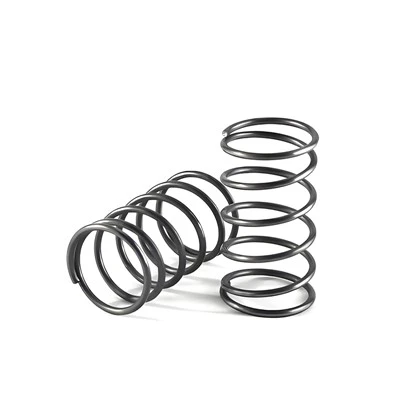
First, let’s define what pre-stress actually is, because the term gets tossed around a lot without a clear explanation. For compression springs, pre-stress (often called presetting or residual compressive stress) is the intentional, controlled compression applied to the spring after it’s wound, before it leaves our facility. It’s not just squeezing the spring randomly—we do this by compressing the spring all the way to its solid height multiple times, under precise force and temperature conditions, to set its windings to a permanent, slightly shorter length. That might sound counterintuitive: why would we shorten a spring that’s supposed to expand? But here’s the key: untreated springs have inherent “stress relaxation” built into their metal structure, and pre-stress works to counter that.
When a compression spring is wound from round wire, the manufacturing process itself creates internal stresses. As we bend and twist the wire into helical coils, the outer edges of the wire’s cross-section are pulled in tension, and the inner edges are pushed in compression. If we leave those stresses unaddressed, the spring will shift over time. For example, a customer who designs a spring to provide 100 pounds of force at 2 inches of travel might find that after a few thousand cycles, the spring loses force because the coils slowly “set” into a longer, looser shape. That’s stress relaxation in action. Pre-stress reverses that: by compressing the spring beyond its working limits during manufacturing, we lock in a portion of the stress, so when the spring is installed and put to work, the forces it encounters don’t cause permanent deformation.
Let’s talk about real-world applications to make this concrete. Last year, a client who manufactures agricultural hydraulic cylinders reached out to us with a problem. Their cylinders used compression springs to push a sealing ring against the cylinder wall, preventing fluid leaks. The springs were failing after just 10,000 cycles, and they were blaming our spring material. When we ran tests, we found the springs had no pre-stress applied. After 10,000 cycles, the untreated springs had stretched (well, expanded—since they’re compression springs) by 12%, reducing their force output from the required 80 pounds to just 45 pounds. The sealing ring no longer pressed tight, and the cylinders leaked. We worked with their engineering team to adjust the design: we added a moderate pre-stress level, calibrated to 15% of the spring’s maximum working load. Now, those same springs last over 100,000 cycles, and the cylinders run without leaks. That’s the power of pre-stress in a nutshell: it turns a disposable part into a long-term component.
Another big benefit of pre-stress is consistent force output over the spring’s life. Every compression spring has a load curve, which maps force to deflection. Without pre-stress, that curve will drift downward as the spring relaxes. Pre-stress flattens that curve, so the force the spring delivers stays within a tight tolerance for its entire operational life. This is non-negotiable for industries like medical devices, where precision is everything. For example, a client making insulin pump valves needed springs that deliver exactly 3.2 pounds of force to seal the drug reservoir and dispense the correct dose. If the spring’s force drifts even 0.5 pounds, the dose is wrong, which could have dangerous consequences. We spec’d a high-precision pre-stress for those springs, so their force output varies by less than 2% over 50,000 cycles—well within the medical industry’s strict standards. Without pre-stress, that tolerance would be impossible to hit.
Wait, but is all pre-stress the same? No—there are different levels, and getting it right is where our experience as a supplier comes in. Too little pre-stress, and you still get relaxation; too much, and you risk over-stretching the wire’s tensile strength, leading to early breakage. For example, a heavy-duty suspension spring for off-road equipment needs higher pre-stress to handle thousands of rough cycles, but a small spring for a electronic connector needs much less. We calculate pre-stress based on the spring’s material (music wire vs. stainless steel vs. titanium), wire gauge, coil count, and intended use. For music wire springs (common for high-duty cycles), we typically apply pre-stress equal to 10-20% of the spring’s ultimate tensile strength. For stainless steel springs, which are more corrosion-resistant but have lower tensile strength, we keep pre-stress at 8-15% to avoid damage.
A common myth I hear from new customers is that pre-stress adds cost. Let’s debunk that. Yes, it’s an extra step in manufacturing, but the cost is negligible compared to the cost of replacing failed parts, downtime, or warranty claims. I’ve seen clients save 30% on maintenance costs after switching to pre-stressed springs, because their components break less often. One automotive client told me their assembly line downtime for spring replacement dropped by 40% after we switched all their clutch springs to pre-stressed versions. That’s not a small win—for a factory running 24/7, every minute of downtime costs thousands of dollars.
Another point: pre-stress affects the spring’s solid height and free length, which are critical for installation. When we apply pre-stress, we’re compressing the spring closer to its solid height than its natural free length. That means the free length of a pre-stressed spring is slightly shorter than an unstressed spring made from the same specs. If your team is designing a part with tight space constraints, that shorter free length can be a big advantage. But it also means you can’t just swap an unstressed spring for a pre-stressed one without adjusting your design. That’s why it’s so important to work with a supplier early in the design process, so we can account for pre-stress in the part dimensions from the start.
I want to be clear: pre-stress isn’t a fix for a bad design. If your spring is too thin, or your load requirements are way beyond the material’s capacity, pre-stress won’t save it. But when paired with a well-designed spring, it’s the difference between a part that works once and one that works for years. Over the last 12 years as a compression spring supplier, I’ve seen more design failures from ignoring pre-stress than from any other single factor. It’s not a “nice-to-have” feature—it’s a fundamental part of spring performance.
Now, I know every application is unique. Maybe you’re designing a small medical device, a heavy industrial machine, or a consumer electronics part that needs to last for millions of cycles. If you’re not sure whether pre-stress is right for your springs, or you’re seeing unexpected force loss or part failure, we can help. We don’t just sell springs—we work with our clients to optimize their designs, and that includes explaining how pre-stress will impact their performance and bottom line.
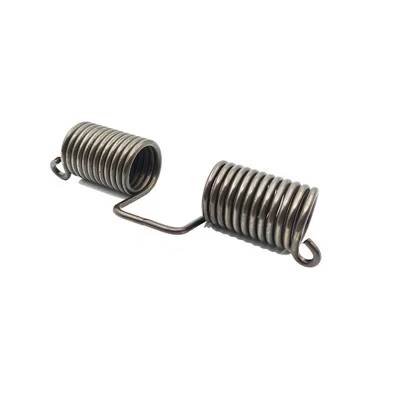
Extension Spring If you’re ready to learn more about how pre-stressed compression springs can improve your parts, or you have questions about your current design, reach out to our team. We can walk you through our manufacturing process, test your current springs to see if pre-stress would help, or create a custom pre-stressed spring tailored to your exact needs. We’re here to turn your design challenges into solutions, and make sure your parts perform reliably, cycle after cycle.
References
- Harris, T. A., & Kotzas, K. L. (2007). Rolling Bearing Analysis. Wiley.
- Shigley, J. E., & Mischke, C. R. (1989). Mechanical Engineering Design. McGraw-Hill.
- ASME B18.16.3M-1995, Compression, Extension and Torsion Helical Springs. American Society of Mechanical Engineers.
- Norton, R. L. (2000). Machine Design: An Integrated Approach. Prentice Hall.
- Bloom, R. L. (1978). Design and Manufacture of Helical Springs. Spring Manufacturers Institute.
Shengzhou Deyuxiang Hardware Accessories Co., Ltd.
We are one of the most professional compression spring manufacturers and suppliers in China, also support customized service. With abundant experience, we warmly welcome you to buy high quality compression spring made in China here and get pricelist from our factory. For price consultation, contact us.
Address: No. 38, Caosheng Road, Caoqiao Street, Pinghu City, Jiaxing City, Zhejiang Province
E-mail: 877286126@qq.com
WebSite: https://www.dyx-spring.com/
