If you’ve ever stood in a fabric store, running your fingers over a soft cotton shirt that stayed bright blue after 20 washes, or admired a vintage silk scarf with rich, un faded reds, you’ve probably taken dyes for granted. As someone who’s spent 12 years sourcing and supplying high-quality dyes for textile, paper, and even specialty cosmetic applications, I get it—most of us see dyes as just “the stuff that makes things colored,” not a complex chemical system that relies on tiny molecular bonds to do their job. But if you’ve ever wondered why some dyes bleed in the wash while others last for years, or why a deep navy works on cotton but not on polyester, the answer all starts at the molecular level. Let’s break this down like I explain it to new clients who walk into my office—no stuffy PhD jargon, just real, straight-talk science that ties back to why our products work as hard as you do. Dyes
First, let’s get one key distinction out of the way: dyes aren’t pigments. I see this mix-up all the time with small apparel brands and DIY crafters, and it’s a costly mistake. Pigments are tiny, insoluble particles that stick to surfaces mechanically—think of the red powder in oil-based house paint that sits on top of a wall, held there by a binder. Dyes, on the other hand, are soluble (or at least become reactive when mixed with water or other carriers) and bond chemically to the material they color. That’s why a dye can get into the gaps of a fabric fiber instead of just sitting on top, which means it’s less likely to fade, bleed, or rub off. The trick is that this chemical bond has to be strong enough to survive washing, sunlight, and wear, but not so strong that it can’t penetrate the fiber in the first place.
Let’s zoom into a single molecule of a common textile dye—say, a reactive red, one of our best-selling dyes for cotton. A dye molecule has two main parts: a chromophore, which is the part that gives it color, and an auxochrome, which is the part that makes it bond to the fiber. The chromophore is easy to spot: it’s a cluster of alternating double and single carbon bonds, called a conjugated system. When white light hits this system, some wavelengths get absorbed, and the ones we see bounce back. For our reactive red, the conjugated system absorbs green and blue light, so we see the warm red hue. Tweak that conjugated system—add a nitrogen atom here, swap out a carbon group there—and you get a different color, which is how we make our 200+ standard shades, plus custom mixes for clients.
The auxochrome is where the magic (and the bond) happens. For reactive dyes, which are the gold standard for cotton, linen, and other plant-based fibers, the auxochrome has a special chemical group called a reactive link—usually a chlorotriazine or vinyl sulfone. Cotton fibers are made of cellulose, a long chain of sugar molecules with lots of hydroxyl (-OH) groups sticking out along their length. When you mix the dye into a warm, slightly alkaline bath, those hydroxyl groups on the cotton become deprotonated, meaning they lose a hydrogen ion and turn negative. The reactive link on the dye molecule is designed to react with those negative groups: it snips off a chloride or sulfonate group, and forms a covalent bond—one of the strongest chemical bonds there is—between the dye and the cellulose. That’s why reactive dyed cotton doesn’t fade easily: that covalent bond doesn’t break with a little soap and water.
But reactive dyes only work on fibers with those hydroxyl groups, right? That’s why polyester, nylon, and acrylic fabrics need different types of dyes. Polyester is a synthetic fiber made of long chains of polyethylene terephthalate, with almost no hydroxyl groups to form covalent bonds. So we use disperse dyes for polyester instead. Disperse dye molecules are small, non-ionic (they don’t have a positive or negative charge) and have a slightly oily quality. The process here is a little different, but still molecular. When you heat the polyester fabric (usually to 130–140°C, in a high-temperature steam or pressure pot), the synthetic polymer chains in polyester loosen up, creating tiny gaps in the fiber structure. The small disperse dye molecules slip into those gaps, and when the fabric cools, the polymer chains tighten back up, trapping the dye molecules inside the fiber. It’s like tucking a small toy into a closed shoebox—there’s no chemical bond, but the dye can’t get out because the fiber is holding it tight. That’s why you can’t dye polyester with regular cotton dyes; their molecules are too big to slip into the polyester gaps, and they won’t form bonds if they can’t get inside.
I’ve learned over the years that this molecular specificity is one of the biggest pain points clients come to us with. I once had a small apparel brand come to me upset because they’d bought a cheap batch of “universal dye” online and ruined 500 yards of polyester-blend fabric— the dye sat on top, rubbed off all over their sewing tables, and faded after one wash. That’s because universal dyes are usually reactive dyes, made for cellulose, and they don’t have the right structure to bond to or penetrate synthetic fibers. My team spends time testing clients’ fibers first, figuring out what type works best, and even adjusting dye concentrations to get the exact shade they need without wasting product. That personal touch is what separates us from big, faceless dye suppliers.
Another key molecular factor is light fastness—how well a dye holds its color when exposed to sunlight. That’s all about the stability of the chromophore group. If the conjugated system in the dye molecule is weak, sunlight’s ultraviolet radiation will break those double bonds apart, changing how light is absorbed, and the color fades. For outdoor fabrics, like patio cushions or awnings, we use dyes with more stable chromophores—usually ones with aromatic rings or metal complex centers, which are less likely to break down when hit with UV rays. I tested this last summer: a batch of patio cushion fabric dyed with our standard high-light-fast blue vs. a cheap generic dye from overseas. After 3 months of direct sun, the generic had faded to a pale, washed-out gray, while our batch was still almost as bright as the day it left our warehouse. That’s molecular science working for you, not against you.
Wash fastness, too, comes down to molecular bonds. For acid dyes, which we use for wool, silk, and other protein fibers (made of amino acids with -NH2 groups), the bond is ionic, not covalent. Acid dye molecules have a negatively charged auxochrome, and protein fibers have positively charged amino groups when mixed in an acidic bath. The opposites attract, forming an ionic bond that’s strong enough for most washes, but sometimes clients need extra performance for industrial laundering. That’s when we add a fixing agent, which is a small molecule that forms a bridge between dye and fiber, making the ionic bond even stronger. I always tell clients: if your fabric is going through 100 washes (like work uniforms or hotel linens), don’t skip the fixing step—its molecular chemistry is the difference between a product that lasts and one that falls apart.
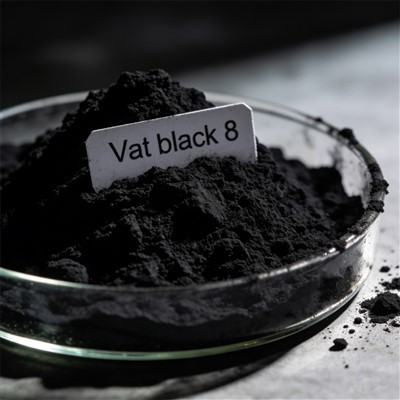
Now, you might be wondering: do all dyes work this way? What about natural dyes, like indigo or turmeric? Those have their own molecular structures, too, but they work differently because they’re usually less stable and rely on different bonds. Indigo, for example, is a vat dye: it’s insoluble in water, so you have to reduce it (change its molecular structure in a bath of sodium hydroxide and sodium hydrosulfite) to make it soluble. It soaks into the cotton fiber, then oxidizes when it hits air, turning back into its original insoluble form, trapped inside the fiber. That’s why indigo jeans fade the way they do— the outer layer of dye wears off, exposing the lighter indigo underneath. Natural dyes have their charm, but they’re less consistent in shade and wash fastness because their molecular structure is harder to control at scale. That’s why most industrial brands still turn to synthetic dyes, which we source to meet strict environmental standards, for reliability.
At the end of the day, every decision we make as a supplier ties back to that molecular level. When we test a new batch of dye, we’re not just checking the color on a fabric swatch—we’re checking how the chromophore reacts to light, how the auxochrome bonds to different fibers, how the molecules hold up under heat and detergent. We don’t cut corners on that because I’ve seen firsthand what happens when you do: clients get frustrated, products get returned, and no one wins.
If you’re a apparel brand, a textile manufacturer, a paper producer, or someone who needs consistent, high-quality dyes for your product, you don’t have to be a chemist to get it right. You just need a supplier who knows the molecular details that make dyes work, and who can tailor their products to your specific needs. We’ve worked with small startups and large Fortune 500 companies alike, and every client gets the same attention: a thorough evaluation of their fiber, their desired use, and their budget, paired with the right dye and support to make it work.

If you’re tired of working with dyes that don’t perform like they should, or if you have a custom color or application you haven’t found a solution for, reach out to our team for a consultation. We’ll walk you through the molecular basics that matter for your project, help you pick the right dye, and make sure you get the results you’re looking for. Let’s build something colorful that lasts.
Disperse Dyes Liquid Series References
- Zollinger, H. (2003). Color Chemistry: Synthesis, Properties, and Applications of Organic Dyes and Pigments. Wiley-VCH.
- Lewin, M., & Pearce, E. M. (1998). Handbook of Fiber Science and Technology: Volume III, High Technology Fibers. CRC Press.
- Shore, J. (1990). Disperse Dyes: Chemistry and Application. Society of Dyers and Colourists.
- Pearce, E. M. (1988). The Chemistry and Application of Reactive Dyes. Textile Progress.
Shandong Inno-Chem Co., Ltd.
As one of the most professional dyes manufacturers and suppliers in China, we offer a wide range of products with superior quality. Please feel free to buy high-grade dyes made in China here from our factory. For price consultation, contact us.
Address: Room 1503, Baisheng Commercial Building, No.22 Qufu Road, Shinan District, Qingdao City, Shandong, China
E-mail: info@innodyeschem.com
WebSite: https://www.innodyeschem.com/
