When you’re in the pump shaft supply business, I get asked a lot by customers—engineers, plant managers, even small shop owners upgrading their equipment—“What’s the big deal about surface treatments for these shafts? Isn’t polishing enough?” That question always makes me pause, because surface treatments aren’t just a fancy add-on. They’re the difference between a shaft that lasts 6 months in a chemical processing plant and one that runs for 8 years straight without a hitch. Let me break this down like I do for every new client, no jargon overload, just the real stuff that matters. Pump Shaft
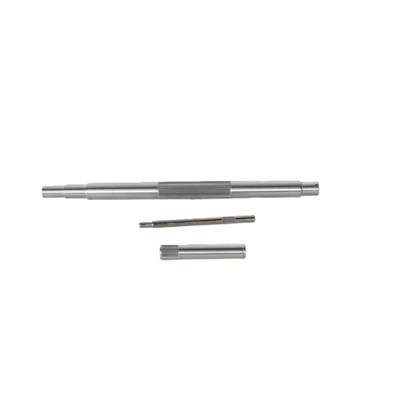
First, let’s get on the same page: pump shafts take a beating. They spin at super high speeds sometimes, dip into corrosive fluids (acids, brines, even muddy wastewater), rub against seals and bearings every single revolution, and deal with constant stress from torque and load. The base steel of a shaft—usually carbon steel, stainless steel, or alloy steel—gets you a solid foundation, but it rarely holds up on its own. That’s where surface treatments come in: they modify the top layer of the shaft (just a few microns thick, sometimes) to fix the weaknesses of the base metal, not replace it.
I’ve seen way too many customers skip this step because they think it’s “too expensive” or “overkill,” only to call me a month later asking for a replacement shaft because their original corroded through or a seal blew out and destroyed the whole pump. Trust me, a $200 surface treatment on a $1,000 shaft saves you way more than replacing the entire pump when it fails. Let’s run through the most common treatments we offer, why we use each, and when you actually need ’em.
Let’s start with the basics: electroplated hard chrome. This is the workhorse of our shop, and for good reason. It’s cheap, it’s easy to apply, and it gives you that super smooth, hard surface you need for seals and bearings. Wait, let’s be real—no one wants a rough shaft surface because a seal (like a mechanical seal, which is what most pumps use now) will wear out in weeks if the shaft has tiny scratches or bumps. Chrome plating deposits a layer of chromium (like, 0.05mm to 0.5mm thick) onto the shaft, which is way harder than steel—like, 700 to 800 HV, compared to steel’s 200 to 300 HV. That means it resists abrasion from particles in the fluid, like sand in a wastewater pump, way better.
But here’s the catch: not all chrome is the same. A lot of cheap platers use “regular” chrome plating that’s full of tiny cracks (called microcracking) because the process produces hydrogen, which can get trapped in the steel and make it brittle—hydrogen embrittlement. That’s a big no-no for high-stress shafts, like ones used in centrifugal pumps that spin 3,600 RPM. We only use “crack-free” or “low-crack” chrome plating here, and we always do a post-plating heat treatment to get rid of that hydrogen. I’ve had a customer bring back a cheap off-the-shelf shaft with cracked chrome that failed in 2 months, and when we re-plated it with our low-crack stuff, it’s still running 3 years later. Moral of the story: if you’re going chrome, don’t cut corners on the plating process.
Next up: thermal spray coatings. This is for when you’re dealing with way harsher conditions, like corrosive fluids or extreme abrasion. Thermal spray works by melting a material (usually tungsten carbide, ceramic, or even another metal) and spraying it onto the shaft at super high speed. The coating is denser and way tougher than chrome, sometimes 1,200 HV or higher. We use a lot of tungsten carbide thermal spray for shafts in oil and gas pumps, where they’re exposed to sour crude or high-solids drilling mud.
Wait, thermal spray isn’t perfect. It’s a bit thicker than chrome, so you have to make sure you account for the thickness when you machine the shaft to the right diameter. Also, if the coating has tiny pores (from bad spraying), those pores can let corrosive fluid seep through and eat away at the base steel underneath. That’s why we always do a post-spray sealing process with epoxy or polymer to plug those pores. I learned that the hard way a couple years ago—we had a batch of shafts with porous thermal spray, and a customer in a chemical plant called us saying they were failing from the inside out. We fixed the process, added the sealing step, and haven’t had that issue since.
Then there’s electroless nickel plating. This is different from electroplated chrome because it’s chemical, not electrical, so it coats the entire shaft evenly—even the tiny grooves or crevices that you can’t reach with electroplating. That makes it perfect for complex shaft designs, like ones with keyways or threaded ends. Electroless nickel is also super smooth, and you can adjust its hardness (from 400 HV to 1,000 HV) by heating it after plating. If you heat it up to 400°C, it turns into a nickel-phosphorus alloy that’s way harder and more wear-resistant.
What’s the downside? It’s more expensive than chrome, and it doesn’t hold up as well to extreme abrasion as tungsten carbide. We usually recommend electroless nickel for pumps that handle mild to moderate corrosion, like food and beverage pumps (since it’s non-toxic, no heavy metals leaching out) or water pumps for municipal systems. A lot of food plant managers love this because they don’t have to worry about chrome flaking into their product, which would be a huge regulatory headache.
Now, let’s talk about surface treatments that don’t add a thick layer—these are the ones that modify the actual top of the shaft itself, not add something on top. Nitriding is one of those. It’s a heat treatment where we heat the shaft to around 500°C and expose it to nitrogen gas, which diffuses into the steel and forms hard nitrides (like iron nitride) in the top 0.1mm to 0.5mm of the surface. That makes the surface way harder (up to 1,100 HV) and super wear-resistant, and the base steel stays tough because we don’t heat it enough to warp it.
Nitriding is great for high-stress shafts, like ones in multi-stage pumps where the shaft has to handle a lot of bending and torque. Unlike chrome, it doesn’t peel off (since it’s part of the metal), so it lasts really long. But it’s not good for corrosion resistance on its own—we usually pair nitriding with a thin electroless nickel or chrome coating if the shaft is going into a corrosive fluid. Also, nitriding can’t be done on stainless steel grades like 304, because the chromium in stainless steel forms a protective layer that blocks the nitrogen from diffusing. For those, we use a different treatment, like nitrocarburizing, which adds carbon too to get around that.
Another one: shot peening. Wait, most people don’t think of shot peening as a surface treatment for pump shafts, but it’s actually super important. Shot peening is when you blast tiny, hard particles (steel shot, glass beads) at the shaft surface to create tiny compressive stresses. Why does that matter? Pump shafts are always under tension from spinning and load—compressive stresses cancel out some of that tension, which prevents cracks from forming and spreading. That’s the main way to stop fatigue failure, which is responsible for like 90% of pump shaft breaks.
We do shot peening on every shaft before we apply any other coating, and a lot of customers ask why we charge extra for it. But let’s put it in perspective: if a shaft fails from fatigue, it can snap in half while a pump is running, which will destroy the impeller, the casing, even the motor. That’s way more expensive than a $50 shot peening treatment. I had a customer in a power plant who skipped shot peening once, and a shaft snapped during a peak load, costing him $50k in downtime and parts. Now he makes it a mandatory step for all his shafts.
Now, let’s talk about when you don’t need a fancy treatment. If you’re using a small, low-speed water pump for a backyard irrigation system, the base stainless steel shaft might be enough—just a quick polish to get rid of any sharp edges, and you’re good. But if you’re in industrial, commercial, or heavy-duty equipment? Don’t cut corners here.
Wait, I should also mention a bad one to avoid: poor quality chrome plating with hydrogen embrittlement. We see this all the time from overseas suppliers. They cut corners on the plating process, don’t do the heat treatment, and within a few months, the shaft snaps because of hydrogen embrittlement. That’s why we never source our coatings from random vendors—we test every batch to make sure it meets our standards.
Now, let’s wrap this up with what this means for you, as someone shopping for pump shafts. First, tell us what your pump is for: what fluid is it handling? What’s the speed? Is it in a corrosive environment? Do you need it to last 2 years or 10 years? We can recommend the right treatment for you.
If you’re tired of replacing pump shafts every 6 months because of failed surface treatments, if you need a supplier that actually knows what they’re doing with these processes, hit us up to chat. We don’t just sell you a shaft—we help you pick the right surface treatment to match your application, so you don’t have to deal with downtime, broken pumps, or extra costs.

At the end of the day, surface treatments aren’t an afterthought. They’re the reason a good pump shaft becomes a great pump shaft. Skip the cheap, untested stuff, go with a supplier that stands behind their work, and you’ll save yourself a ton of hassle down the line.
Machined Part References
- ASM International. (2020). Surface Engineering for Corrosion and Wear Resistance. ASM Handbook.
- Breyer, N. (2018). Pump Shaft Design and Surface Treatment Best Practices. Journal of Fluid Machinery.
- Davis, J. R. (2005). Surface Treatments for Carbon and Alloy Steels. ASM International.
- Karam, P. (2019). Thermal Spray Coatings for Rotating Equipment. Proceedings of the International Pump Users Symposium.
- Nicholson, R. B. (2017). Electroless Nickel Plating: Processes and Applications. Finishing Industry Association.
Ningbo Uni-drive Technology Co., Ltd.
Ningbo Uni-drive Technology Co., Ltd. is one of the most professional pump shaft manufacturers and suppliers in China. Please feel free to buy cheap pump shaft made in China here and get pricelist from our factory. All customized products are with high quality and competitive price.
Address: Industrial Site No. 6, Jingtou Village, Sanqi Town, Yuyao City, Zhejiang Province
E-mail: admin@uni-drive.com.cn
WebSite: https://www.motordriveshaft.com/
