In the realm of engineering and technology, the concepts of coupling and cohesion are fundamental yet often misunderstood. As a supplier deeply entrenched in the world of coupling, I have witnessed firsthand the intricate relationship between these two essential concepts. In this blog post, I aim to demystify how coupling relates to cohesion and why understanding this relationship is crucial for businesses and engineers alike. Coupling
Understanding Coupling and Cohesion
Before delving into their relationship, it’s imperative to define what coupling and cohesion mean. Coupling refers to the degree of interdependence between different components or modules within a system. High coupling implies that components are closely linked and changes in one component can significantly impact others. On the other hand, low coupling indicates that components are relatively independent, and modifications to one component have minimal influence on others.
Cohesion, in contrast, pertains to the degree to which the elements within a single module or component belong together. High cohesion means that the functions or tasks within a module are closely related and focused on a single purpose. Low cohesion suggests that a module performs a variety of unrelated tasks.
The Relationship between Coupling and Cohesion
The relationship between coupling and cohesion is inversely proportional. In an ideal system, we strive for high cohesion and low coupling. High – cohesion components are well – structured and perform a single, well – defined task. When components have high cohesion, they are more likely to be independent of each other, resulting in low coupling.
For instance, consider a software application. If a module within the application is designed to handle user authentication only, it exhibits high cohesion. Since its purpose is clear and focused, it can be easily integrated with other modules that perform different functions, such as data storage or user interface rendering. This independence between modules leads to low coupling.
Conversely, if a module tries to do too many things—like handling user authentication, data storage, and user interface display all at once—it has low cohesion. Such a module is likely to be tightly coupled with other parts of the system because changes in one aspect (e.g., the authentication process) can have a cascading effect on the data storage and user interface components.
Benefits of High Cohesion and Low Coupling
For Software Development
In software development, systems with high cohesion and low coupling offer several advantages. First, they are easier to maintain. Since components are independent, developers can make changes to one module without fear of breaking other parts of the system. This reduces the time and effort required for debugging and code updates.
Second, high – cohesion and low – coupling systems are more flexible. New features can be added by developing separate, cohesive modules and integrating them into the existing system with minimal disruption.
Third, these systems are more scalable. As the system grows, it is easier to distribute the workload across multiple components when they have clear boundaries and are loosely coupled.
For Mechanical Engineering
In mechanical engineering, the relationship between coupling and cohesion also plays a vital role. High – cohesion mechanical components are designed to perform a specific mechanical function, such as power transmission or torque conversion. These components can be easily combined with other parts of the machine because they have low coupling with the rest of the system.
For example, a well – designed coupling in a mechanical system is a high – cohesion component. It is specifically engineered to connect two shafts and transmit power efficiently. Since its function is clear and specific, it can be integrated into a variety of machines without causing major design changes to other parts of the system.
Challenges in Achieving High Cohesion and Low Coupling
While the benefits of high cohesion and low coupling are clear, achieving this balance is not without challenges. One of the main difficulties is in the initial design phase. Determining the optimal way to divide a system into components that are both cohesive and loosely coupled requires careful planning and a deep understanding of the system’s requirements.
In addition, as systems evolve over time, maintaining high cohesion and low coupling can become increasingly difficult. New requirements may force developers or engineers to modify existing components, which can inadvertently increase coupling and reduce cohesion.
Another challenge is the trade – off between performance and coupling. In some cases, a certain degree of coupling may be necessary to achieve optimal performance. For example, in a real – time system, components may need to communicate more closely to meet strict timing requirements, which can lead to higher coupling.
How Our Coupling Products Fit into the Equation
As a coupling supplier, we understand the importance of these concepts in the design and operation of various systems. Our coupling products are designed with high cohesion in mind. Each coupling is engineered to perform a single, well – defined task: to transmit power between two shafts efficiently and reliably.
Our couplings are also built to have low coupling with the rest of the system. They are designed to be easily integrated into different types of machinery without requiring extensive modifications to the existing design. This flexibility allows our customers to use our couplings in a wide range of applications, from industrial manufacturing to automotive systems.
Moreover, our research and development team is constantly working to improve the cohesion and coupling characteristics of our products. We invest in advanced materials and manufacturing techniques to ensure that our couplings are not only more cohesive but also more adaptable to different systems, reducing the overall coupling with other components.
The Role of Our Coupling in Promoting System Resilience
In addition to the design efficiency benefits, our coupling products play a crucial role in promoting the resilience of the entire system. When a system has components with high cohesion and low coupling, it can better withstand external shocks and internal failures.
For example, in a power generation system, our coupling can isolate faults in one part of the system. If a problem occurs in a specific generator, the low – coupling nature of our coupling ensures that the problem is less likely to spread to other generators or components in the system. This ability to contain failures is essential for maintaining the overall stability and reliability of the power generation network.
Conclusion and Call to Action
In conclusion, the relationship between coupling and cohesion is a cornerstone of effective system design in both software and mechanical engineering. High cohesion and low coupling lead to systems that are easier to maintain, more flexible, and scalable.

As a coupling supplier, we are committed to providing products that embody these principles. Our couplings are designed to contribute to the overall efficiency and reliability of your systems. Whether you are involved in a small – scale project or a large – scale industrial application, our coupling products can meet your needs.
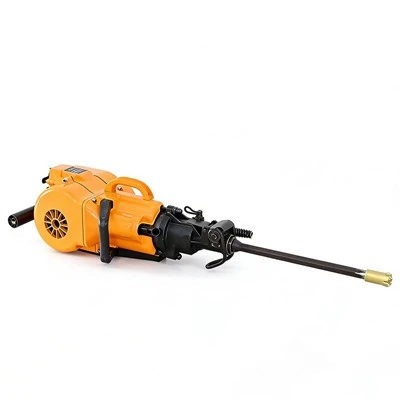
Rock Drill We invite you to reach out to us to discuss your specific coupling requirements. By working together, we can ensure that your system benefits from the optimal balance of high cohesion and low coupling. Contact us to start a procurement discussion and discover how our coupling solutions can enhance the performance of your systems.
References
- Stevens, W. P., Myers, G. J., & Constantine, L. L. (1974). Structured design. IBM Systems Journal, 13(2), 115 – 139.
- Yourdon, E., & Constantine, L. L. (1979). Structured Design: Fundamentals of a Discipline of Computer Program and Systems Design. Prentice – Hall.
- Pressman, R. S. (2014). Software Engineering: A Practitioner’s Approach. McGraw – Hill Education.
Super Rock Machinery Equipment (Qingdao) Co., Ltd.
We are one of the most professional coupling manufacturers and suppliers in China, featured by quality products and good price. Please feel free to buy advanced coupling for sale here from our factory. Welcome to view our website for more information.
Address: No. 45, Pengwan Road, Qianwan Bonded Port Area, Qingdao Sub-district, Free Trade Pilot Zone, Shandong China
E-mail: sales@superrocktools.com
WebSite: https://www.superrocktools.com/
