As a supplier in the Heating & Lighting business, I often get asked a lot of questions from customers. One question that pops up quite often is, "Do LED lights attract insects?" It’s a valid concern, especially for those who use lighting outdoors or in areas where bugs can be a nuisance. So, let’s dig into this topic and see what the deal is with LED lights and insects. Heating & Lighting

First off, we need to understand why insects are attracted to light in the first place. Many insects use natural light sources like the sun and moon for navigation. They have a built – in mechanism that helps them keep a straight flight path by maintaining a constant angle to these light sources. When they encounter artificial lights, it messes up their navigation system. They get disoriented and end up flying around the light in a spiral.
Traditional incandescent bulbs produce a lot of heat along with light. The heat can be appealing to some insects as it mimics the warmth of the sun or other natural heat sources. These bulbs also emit a broad spectrum of light, including ultraviolet (UV) light. And guess what? A whole bunch of insects are highly attracted to UV light. Mosquitoes, moths, and many other flying bugs have photoreceptor cells in their eyes that are sensitive to UV wavelengths. So, when you turn on an old – fashioned incandescent light, it’s like throwing a big party for the bugs.
Now, let’s talk about LED lights. LEDs are a different ballgame. They are much more energy – efficient than incandescent bulbs, and one of the reasons for this is that they produce very little heat. Since insects aren’t drawn to the lack of heat from LEDs, that’s one strike against the idea that they’ll attract a ton of bugs.
But what about the light spectrum? LEDs can be engineered to produce specific wavelengths of light. Most standard white LED lights emit very little UV light. In fact, compared to incandescent and fluorescent lights, the amount of UV radiation from LEDs is negligible. And since insects are so into UV light, this means that LEDs are generally less attractive to them.
However, it’s not a one – size – fits – all situation. There are different types of LED lights, and the color of the light can play a role in how attractive it is to insects. For example, blue and white LEDs tend to attract more insects than warmer – colored LEDs like yellow or amber. Blue light has a shorter wavelength, and it’s closer to the UV spectrum that insects love. So, if you’re using blue – tinted LED lights outside, you might notice a few more bugs buzzing around.
On the other hand, yellow and amber LEDs are much less appealing to insects. These colors have longer wavelengths and are further away from the UV range. They are a great option for outdoor lighting if you want to keep the bugs at bay. You can use them for porch lights, garden lights, or any other outdoor area where you don’t want a swarm of insects.
Another factor to consider is the intensity of the light. Bright lights, regardless of the type, can attract insects. If you have a very bright LED light shining in your yard, it’s more likely to draw in bugs than a dimmer one. So, if you’re trying to minimize insect attraction, you might want to go for lower – intensity LED lights.
I’ve seen some customers who are really worried about bugs around their outdoor lighting. They’ve switched from incandescent bulbs to LED lights, and they’ve noticed a significant difference. One customer had a problem with moths constantly flying around his porch light. After he switched to a yellow LED bulb, the number of moths dropped dramatically. He was really happy with the change, not only because he didn’t have to deal with the bugs but also because his energy bill went down.
Now, I know some of you might be thinking, "Well, if LEDs are so great, why do I still see bugs around them?" There are a few reasons for this. Sometimes, the bugs are just in the area for other reasons, like looking for food or a mate. The LED light might just happen to be there, and they end up flying around it. Also, if there are other light sources nearby that are more attractive to insects, they might fly through the area where your LED light is on their way to the more appealing light.
In addition, some insects are attracted to light for different reasons. For example, some aquatic insects are attracted to horizontal polarized light, which can be reflected off of water surfaces. If your LED light is near a pool or a pond and is reflecting light in a way that mimics the polarization of water, it could potentially attract these insects.
So, to sum it up, LED lights are generally less likely to attract insects compared to traditional incandescent and fluorescent lights. But the type of LED light (color and intensity) matters. If you want to minimize insect attraction, go for warmer – colored (yellow or amber) and lower – intensity LED lights.
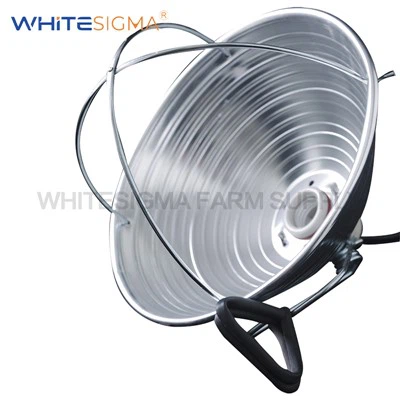
As a Heating & Lighting supplier, I’ve got a wide range of LED lights to suit your needs. Whether you’re looking for outdoor lights to keep the bugs away or indoor lights to brighten up your space, we’ve got you covered. If you’re interested in learning more about our products or want to discuss your lighting requirements, don’t hesitate to reach out to me. We can have a chat about the best options for your specific situation and help you make an informed decision.
Farm Clothing References
- "Insect Vision and the Attraction to Light" by entomology research group at a major university.
- "Energy – Efficient Lighting and Insect Behavior" in a well – known lighting technology journal.
- Customer testimonials and case studies from our own experiences in the lighting business.
Whitesigma Farm Supply Co., Ltd.
Whitesigma Farm Supply Co., Ltd. is one of the most professional heating & lighting manufacturers and suppliers in China, specialized in providing high quality customized service for global clients. We warmly welcome you to wholesale durable heating & lighting made in China here from our factory.
Address: North Ring Road East, Donghe Village, Zhuozhou City, HeBei, China.
E-mail: Snow@whitesigma.com
WebSite: https://www.whitesigma.com/
