In the dynamic landscape of industrial applications, DC motor controllers play a pivotal role in ensuring the efficient and reliable operation of various machinery. As a seasoned DC motor controller supplier, I’ve witnessed firsthand the diverse requirements that industries place on these essential components. In this blog, I’ll delve into the key requirements for a DC motor controller in industrial applications, drawing on my experience and industry knowledge. DC Motor Controller

Precision and Accuracy
One of the primary requirements for a DC motor controller in industrial applications is precision and accuracy. Industrial processes often demand precise control of motor speed, torque, and position to ensure consistent product quality and operational efficiency. A high-quality DC motor controller should be capable of providing accurate and stable control over a wide range of operating conditions.
For example, in a manufacturing plant, a DC motor controller may be used to control the speed of a conveyor belt. The controller must be able to maintain a constant speed, even when the load on the conveyor changes. This requires precise control algorithms and high-resolution feedback sensors to ensure accurate speed regulation.
Similarly, in a robotics application, a DC motor controller may be used to control the movement of a robotic arm. The controller must be able to provide precise control of the arm’s position and orientation, allowing the robot to perform complex tasks with high accuracy. This requires advanced control techniques, such as PID (Proportional-Integral-Derivative) control, to ensure smooth and precise motion control.
Reliability and Durability
Industrial environments are often harsh and demanding, with high temperatures, humidity, vibration, and electrical noise. A DC motor controller used in these environments must be able to withstand these conditions and operate reliably for extended periods of time.
Reliability is crucial in industrial applications, as any downtime can result in significant production losses. A high-quality DC motor controller should be designed with robust components and circuitry to ensure long-term reliability. It should also have built-in protection features, such as overcurrent protection, overvoltage protection, and short-circuit protection, to prevent damage to the controller and the motor.
Durability is another important factor to consider in industrial applications. A DC motor controller should be able to withstand mechanical stress, such as vibration and shock, without malfunctioning. It should also be resistant to environmental factors, such as dust, moisture, and chemicals, to ensure long-term performance.
Efficiency and Energy Savings
In today’s industrial landscape, energy efficiency is a top priority for many companies. A DC motor controller can play a significant role in improving the energy efficiency of industrial machinery by reducing energy consumption and minimizing waste.
A high-quality DC motor controller should be designed with efficient power electronics and control algorithms to minimize energy losses. It should also be able to operate at a high power factor, which reduces the amount of reactive power drawn from the electrical grid.
In addition, a DC motor controller can be used to implement energy-saving strategies, such as regenerative braking. Regenerative braking allows the motor to convert kinetic energy into electrical energy and feed it back into the electrical grid or a battery. This not only reduces energy consumption but also extends the life of the motor and the controller.
Flexibility and Compatibility
Industrial applications often require a high degree of flexibility and compatibility to meet the diverse needs of different industries and processes. A DC motor controller should be able to support a wide range of motor types, ratings, and control modes to ensure compatibility with various industrial machinery.
For example, a DC motor controller may be used to control both brushed and brushless DC motors. It should be able to support different motor ratings, from small fractional horsepower motors to large industrial motors. It should also be able to support different control modes, such as speed control, torque control, and position control, to meet the specific requirements of different applications.
In addition, a DC motor controller should be able to communicate with other industrial devices, such as programmable logic controllers (PLCs), human-machine interfaces (HMIs), and sensors. This allows for seamless integration with existing industrial control systems and enables remote monitoring and control of the motor.
Safety and Compliance
Safety is of utmost importance in industrial applications, and a DC motor controller must meet strict safety standards and regulations to ensure the protection of personnel and equipment. A high-quality DC motor controller should be designed with safety features, such as emergency stop buttons, overcurrent protection, and ground fault protection, to prevent accidents and injuries.
In addition, a DC motor controller must comply with relevant industry standards and regulations, such as UL (Underwriters Laboratories), CE (Conformité Européene), and RoHS (Restriction of Hazardous Substances). These standards ensure that the controller is safe, reliable, and environmentally friendly.
Cost-Effectiveness
In today’s competitive industrial market, cost-effectiveness is a key consideration for many companies. A DC motor controller should provide a balance between performance, features, and cost to ensure that it meets the needs of the application while remaining within budget.
A high-quality DC motor controller may have a higher upfront cost, but it can provide significant long-term savings through improved efficiency, reliability, and productivity. When selecting a DC motor controller, it’s important to consider the total cost of ownership, including the initial purchase price, installation costs, maintenance costs, and energy savings.
Technical Support and Service
Finally, technical support and service are essential for ensuring the successful operation of a DC motor controller in industrial applications. As a DC motor controller supplier, I understand the importance of providing prompt and reliable technical support to my customers.
I offer a comprehensive range of technical support services, including installation assistance, troubleshooting, and maintenance. I also provide training and educational resources to help my customers understand how to use and maintain their DC motor controllers effectively.
In addition, I offer a warranty on all my DC motor controllers to provide my customers with peace of mind. If a controller fails during the warranty period, I’ll repair or replace it free of charge.
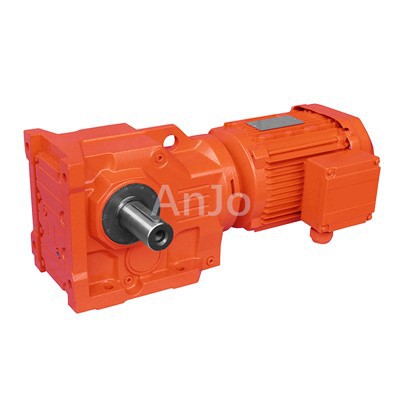
In conclusion, the requirements for a DC motor controller in industrial applications are diverse and demanding. A high-quality DC motor controller should provide precision and accuracy, reliability and durability, efficiency and energy savings, flexibility and compatibility, safety and compliance, cost-effectiveness, and technical support and service. As a DC motor controller supplier, I’m committed to providing my customers with the highest quality products and services to meet their specific needs.
BLDC Planetary Gear Motor If you’re in the market for a DC motor controller for your industrial application, I’d be happy to discuss your requirements and provide you with a customized solution. Please feel free to contact me to start a conversation about your DC motor controller needs.
References
- Austin, Andrew. "DC Motor Control Handbook." Industrial Press, 2015.
- Dorf, Richard C., and Robert H. Bishop. "Modern Control Systems." Pearson, 2017.
- Kuo, Benjamin C. "Automatic Control Systems." Wiley, 2019.
- Nise, Norman S. "Control Systems Engineering." Wiley, 2018.
Hangzhou ANG Drive Co., Ltd.
We’re well-known as one of the leading dc motor controller manufacturers and suppliers in China, also support custom service. Please feel free to wholesale high quality dc motor controller made in China here from our factory. Contact us for more details.
Address: No.185, Jincheng Rd., Hangzhou 311202, China
E-mail: export6@angdrive.com
WebSite: https://www.angdrive.com/
