Hey everyone, I’m Jake, part of the team here at the antistatic bulk bags supplier—one of the questions we get almost every single day is: “Are your antistatic bulk bags actually safe for hazardous materials?” It makes total sense to ask, right? Hazardous materials aren’t the kind of stuff you mess around with, and when you’re moving powders, chemicals, or flammable solids, you can’t afford to cut corners on safety. I’ve spent the last 6 years working with these bags, testing them in our warehouse, and talking to guys who work with industrial materials every day, so I wanted to break this down simply—no jargon, no fancy textbook stuff, just what actually holds up. Antistatic Bulk Bags

First, let’s get one thing straight: not all “antistatic” bags are created equal. A lot of people see a random bag labeled antistatic and assume it works for every hazardous material, but that’s a mistake. The hazardous materials we’re talking about here—think dry powders like plastic resins, agricultural chemicals, pharmaceutical intermediates, even some metal powders—are often prone to something called electrostatic discharge (ESD). If you’ve ever rubbed your socks on carpet and shocked yourself on a doorknob, that’s ESD on a tiny scale. For these materials, that tiny spark? It’s all it takes to ignite flammable dust clouds or cause dangerous chemical reactions. That’s where our antistatic bulk bags come in. They’re not just regular bags with a sticker—they’re built to stop static build-up in the first place.
Wait, let’s explain why static is such a big deal for hazardous materials specifically. When you’re lifting, dropping, or moving a bulk bag, the inner materials rub against each other and the bag fabric. That friction creates a static charge. If the bag doesn’t dissipate that charge, it can build up to thousands of volts. For flammable dusts, the minimum ignition energy (MIE)—the tiny spark that sets it off—can be as low as 0.1 millijoule. That’s less energy than a spark from static cling on a dry day. If you’ve ever handled a bulk bag of wheat flour, sawdust, or even polypropylene pellets, you know how much dust gets kicked up when you open the spout. That dust cloud, plus a static spark? Boom—catastrophic explosion. So our antistatic bags are designed with a conductive layer woven right into the fabric—usually carbon black or metal-coated fibers—that connects to the ground. The charge doesn’t build up; it drains away safely before it can reach dangerous levels. That’s the core of why they’re safe, but there’s a lot more to it than that.
Let’s talk about the testing side, because safety isn’t something you guess at. I don’t just tell customers “these are safe”—we test every batch against industry standards. The main one people rely on is NFPA 77, which is the Standard for Static Electricity in Hazardous Locations, and also IEC 61340, the international standard for electrostatic properties. When a bag meets these standards, it means it’s been tested for surface resistivity. Surface resistivity is just how well a material conducts electricity—we need it to be between 10^4 and 10^11 ohms, right in the “dissipative” range. Anything lower is too conductive (you could risk ground faults or even electrical shock if someone touches a bad spot), anything higher and it won’t drain static. Our bags hit that mark every time. I’ve stood right in our test lab when a engineer runs the static test: they charge a dummy bag with static, measure how long it takes to dissipate, and if it’s over 0.1 seconds, it gets sent back for rework. No cutting corners there.
But here’s the thing: antistatic bulk bags aren’t a one-size-fits-all solution. Some materials need extra protection, right? For example, if you’re handling a corrosive hazardous material—like a strong acid or base, or some reactive chemicals—you also need the bag to be chemical-resistant, not just antistatic. That’s why we offer modified antistatic bags with laminated inner liners that can stand up to those chemicals, so the static protection doesn’t fail when the bag interacts with its contents. We also have bags for materials that are sensitive to moisture, because moisture can mess with antistatic properties (too much moisture and the fabric conducts too well, too little and static builds up). So we work with customers to match the bag to their specific hazardous material, not just sell them any antistatic bag off the shelf.
I know some people out there might have heard horror stories—like a bulk bag that caught fire because the antistatic coating wore off. That’s a common issue with cheap, knockoff antistatic bags. A lot of vendors just spray a cheap static coating on the outside of the bag, and it washes off the first time the bag gets wet or the first time it’s cleaned. Our bags have the conductive fibers woven right into the fabric, so they don’t peel, don’t wash off, and last through dozens of uses if you’re reusing them. We have a customer in the chemical recycling business who’s been using our reusible antistatic bags for 3 years now, and they still pass the static test every quarter. That’s the kind of reliability you need for hazardous materials.
Wait, let’s address a common misconception: antistatic bags vs. conductive bags. Some people think all static-dissipative bags are the same, but there’s a difference. Conductive bags (surface resistivity below 10^4 ohms) are for more extreme ESD-sensitive materials, but for most hazardous materials—flammable dusts, low-MIE powders—antistatic (static-dissipative) bags are perfect. They’re safer than regular woven poly bags, cheaper than conductive bags, and meet all the required industry standards. We get customers who used to buy regular bags and then wonder why they had near-miss incidents with sparks, and switching to our antistatic bags eliminated that entirely. One customer told us last month that they had a static spark scare during a material transfer, and after switching, they haven’t had even a close call in 18 months. That’s the difference between a bag that’s labeled antistatic and one that’s actually safe.
Another big part of safety is proper handling and use of the bags. Even the best antistatic bag won’t work if you misuse it. For example, you can’t tie off a bulk bag with a non-conductive rope, because that stops the grounding path. You need to use metal hardware for lifting loops that connects to the ground (which our bags are designed with, by the way). Also, you can’t repurpose a regular bag as an antistatic bag just by spraying it with a static guard—those sprays wear off after a few uses, and they don’t have the right surface resistivity. A lot of companies cut costs by doing that, and it’s a huge safety risk. We always make sure to walk through proper use with any new customer, because safety isn’t just about the product—it’s about how you use it too.
Let’s talk about specific hazardous materials our customers use these bags for, to make this concrete. A lot of pharmaceutical manufacturers use our antistatic bulk bags for active pharmaceutical ingredients (APIs)—many of these APIs are fine, flammable powders with very low MIE, so static sparks are a major hazard. We’ve also worked with companies that handle food-grade hazardous materials, like specialty corn starches used in industrial applications, where dust explosions are a real risk. Metal powder manufacturers—think aluminum, magnesium, titanium powders—also rely on our bags, because those metals are extremely flammable when airborne. All of these industries have to comply with OSHA standards, and our bags are OSHA-compliant for these uses. We’ve had OSHA inspectors come out to a customer’s facility and specifically confirm that our bags meet their requirements for static protection in hazardous locations.
Is there a time when antistatic bulk bags aren’t safe for hazardous materials? Sure. If you’re handling a material that’s reactive on contact with oxygen or water, or that has a very low MIE that’s even lower than the average, you might need extra protective measures, like hermetically-sealed conductive bags with inert gas flushing. But for the vast majority of common hazardous materials—flammable powders, bulk chemicals, industrial resins—antistatic bulk bags are absolutely safe, as long as they’re properly tested, manufactured to standards, and used correctly.
I’ve seen a lot of suppliers out there overpromise on antistatic bags, but at the end of the day, safety is non-negotiable. We don’t sell a bag just because it’s cheap—we sell a bag that we’d use in our own warehouse, because when you’re dealing with hazardous materials, there’s no room for error. A lot of our customers have been with us for years, not just because of price, but because they know when they lift one of our antistatic bulk bags, the static risk is gone.
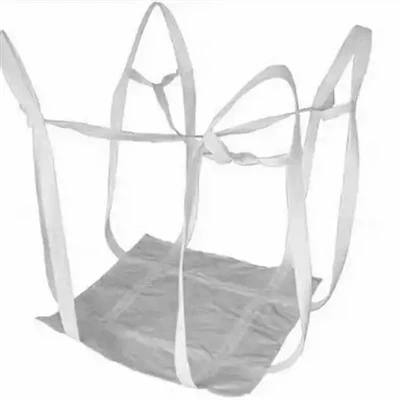
If you’re working with hazardous materials and you’re not sure if your current bags are up to par, or if you’re looking to switch to a safer option, we’re here to help. We can send you sample bags to test, walk you through the standards, and make sure you get the right bag for your specific materials. Don’t take chances with safety—reach out to our team to start a conversation about your bulk bag needs.
FIBC Bag References
- National Fire Protection Association (NFPA) 77: Standard for Static Electricity in Hazardous Locations
- International Electrotechnical Commission (IEC) 61340: Standard for Electrostatic Properties of Materials and Products
- Occupational Safety and Health Administration (OSHA) Static Electricity Safety Guidelines for Hazardous Materials Handling
Heze Jinniu Plastics Co., Ltd.
As one of the most professional antistatic bulk bags manufacturers in China, we have world-leading production equipment and strong manufacturing capabilities. Please rest assured to wholesale bulk high quality antistatic bulk bags for sale here from our factory.
Address: South section of Renmin Road, Heze City, Shandong Province
E-mail: lishaobin2379@163.com
WebSite: https://www.jnbulkbags.com/
