Hey there, if you’re running a textile shop, freelance dyer, or even a small-scale manufacturing unit that’s been tinkering with jigger dyeing, you’ve definitely asked yourself: how much salt am I actually supposed to add? Because too little and your dye job fades like a old band tee, too much and you’re wasting cash plus messing up the fabric’s feel. And if you’re using a washing jigger dyeing machine (shoutout to my day job—wait, no, let’s keep it casual), this question hits way harder than when you’re googling “how much salt for homemade pickles.” I’ve been chatting with textile folks for years about this, and I’ve seen firsthand how a salt that’s off by even a tiny percentage ruins a whole batch of good fabric. Let’s break this down like we’re geeking out over textile hacks, no stuffy lab jargon (well, a little, but I’ll translate). Washing Jigger Dyeing Machine
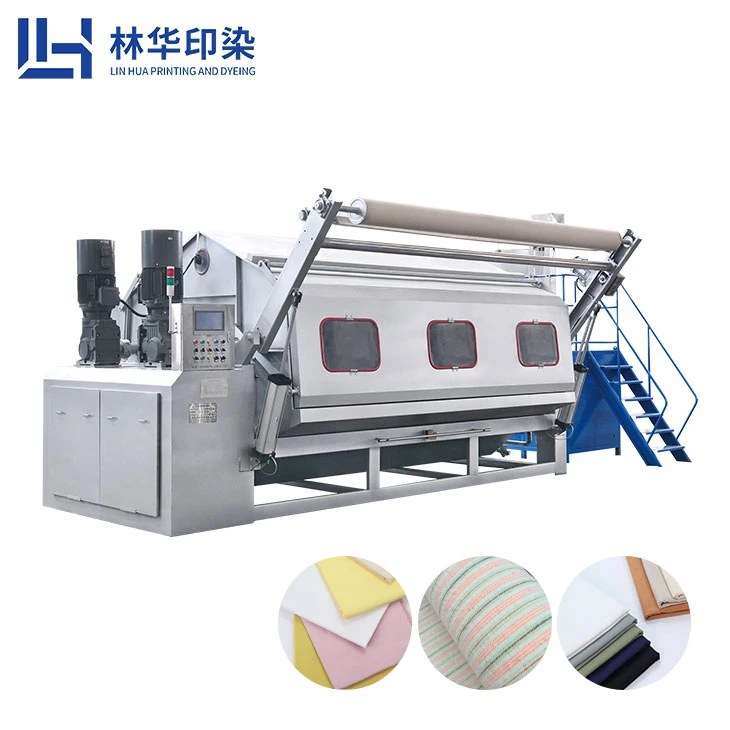
First, let’s get one thing straight: jigger dyeing isn’t the same as dipping a t-shirt in a bucket in your garage. A washing jigger dyeing machine is that closed, continuous roll-to-roll setup you use for long lengths of fabric (like bed linens, dress cottons, or even canvas) where the fabric cycles through dye bath over and over until the color sticks. The salt here isn’t just a flavor booster—it’s a “dye helper,” specifically for direct dyes and reactive dyes, which are the two most common types for jigger work. Reactive dyes bond with fiber molecules, right? Salt acts as a electrolyte that pushes the dye particles out of the dye bath and onto the fabric, because without it, the dye just kind of floats around like unwashed laundry lint. Direct dyes are simpler—they just need salt to neutralize the charge that makes dye and fiber repel each other, like when two magnets push apart. So salt isn’t optional here, it’s a non-negotiable step.
Now, the big number: how much? The short answer is it depends, but let’s start with the baseline that almost everyone gets wrong. For reactive and direct dyes in a standard washing jigger dyeing machine, the usual sweet spot is 5-15 grams per liter (g/L) of dye bath. Wait, that’s a range—why so big? Let’s unpack that. First, fabric type matters a ton. If you’re dyeing cotton, rayon, or any cellulose-based fabric (which is 90% of what people use jigger dyeing for), you’re in that 8-12 g/L zone usually. If it’s a light, thin cotton (like voile or batiste), go lower, like 5-8 g/L—thin fabric has less fiber to hold dye, so too much salt will make the top layer super dark and the inside light, or even leave salt residues that make the fabric feel scratchy. Heavy stuff, like denim canvas or heavy cotton twill, can handle 10-15 g/L because there’s way more fiber to work with.
Wait, but hold up—what if you’re dyeing with a different fiber? Polyester is rare for jigger dyeing because it needs disperse dyes and heat, but if you are doing a blend? Like cotton-polyester? Then the salt amount gets tricky, usually split between the two dye types, so you’d cut the reactive dye salt in half, maybe 3-7 g/L. But most folks reading this are dealing with cellulose, so let’s stick there.
Next, dye depth is a huge factor no one talks about. If you’re doing a pale, pastel color—like soft pink for baby swaddles—you don’t need as much salt, like 5-8 g/L. The dye particles are fewer, so you don’t need a big push to get them to stick. But if you’re doing a deep, saturated color—black, navy, forest green—you need 10-15 g/L. That makes sense, right? More dye particles mean more force to push them onto the fabric so they don’t wash out later. I’ve seen a shop try to do a deep black with 6 g/L salt and the fabric faded after one wash. Total waste of 50 yards of cotton, not to mention time.
Then there’s the washing jigger dyeing machine itself. Wait, this is where being in the business of these machines gives me a unique perspective. Some washing jigger models have bigger dye baths than others. Like, a mini jigger for small batches might have a 500-liter dye bath, while a full-size industrial one has 2000 liters. So if you’re mixing salt by g/L, you have to calculate based on your machine’s bath volume, not just “how much dye am I using.” Let’s do a quick example to make this concrete. If you have a 1000-liter washing jigger dyeing machine, and you’re dyeing medium-weight cotton a medium blue color (so 9 g/L salt), that’s 9000 grams of salt—9 kilograms, or about 20 pounds. That’s a way easier number than guessing by volume (like “one bag of salt”) because bags are different sizes. Also, newer jigger machines with better circulation (we build those, by the way) might let you get away with a little less salt because the dye mixes more evenly, so you’re not wasting salt on spots where the dye isn’t reaching.
Wait, what about when to add the salt? That’s another mistake I see all the time. People dump all the salt in at the start, and it clumps up at the bottom of the jigger, making a super salty spot that stains the fabric. No good. The right way is to add about ⅔ of your salt when you first load the fabric, before the dye goes in, and the remaining ⅓ 10-15 minutes after you start dyeing (and you can add a little extra if you’re doing a deep color). That way the salt dissolves evenly, no clumps, and gets distributed through the whole bath. I always tell my clients: if your salt isn’t fully dissolved before the fabric enters the dye bath, you’re going to get uneven color.
Now, what happens if you add too much salt? Let’s list the issues, because it’s not just wasted money. First, salt buildup on the fabric surface. That makes the fabric feel rough, like it’s coated in tiny grains, and after a few washes, that salt can break down the dye bonds anyway, so fading still happens. Second, uneven dyeing. Too much salt pushes too much dye to the top of the fabric roll, so you get a “ring” effect on the edges of the batch, or light and dark spots. Third, cost. Salt isn’t super expensive, but if you’re running big batches, 5 extra grams per liter adds up. A 2000-liter jigger with 10 g/L extra salt is 20 kg of salt per batch—over a month of 10 batches, that’s 200 kg of salt, which is like $30 extra. Not a ton, but if you’re wasting dye too, it adds up fast.
What if you add too little salt? Dye retention is garbage. The color will bleed during washing, and even during the jigger cycle, the dye will just keep floating out of the bath, so you have to run the fabric through 5 extra cycles instead of 2, wasting water, power, and time. I had a client last year who swore by their old method of using half the recommended salt, and they were going through twice as much dye. When they switched to the right salt amount, their dye use dropped by 30% and their rework went down to almost zero.
Wait, are there exceptions? Of course! If you’re using a “salt-free” reactive dye, which some brands make now, you can cut the salt amount way down, like 1-3 g/L. But those dyes are more expensive, and not all jigger dyeing jobs need them. Also, if you’re dyeing a fabric that’s been pre-treated with a softener or anti-static, you might need a tiny bit more salt, because those coatings repel dye a little. But that’s a specific case, not the standard rule.
Another thing: water quality. If your water is super hard (like has a lot of calcium or magnesium), that can mess with salt’s effectiveness. Hard water ions bond with dye particles, so you might need to add 2-3 g/L extra salt to compensate. I always tell folks to test their water hardness first—you can get a cheap test kit online for like $10, it’s worth it. No sense in guessing about water when it’s such a simple fix.
Let’s circle back to the washing jigger dyeing machine part, because that’s my wheelhouse. A lot of new dyers don’t realize that the machine’s circulation speed affects how salt works. If your jigger has slow, uneven circulation (think old, beat-up machines that don’t mix the bath properly), you need a little extra salt to make up for the dead spots where dye isn’t reaching. But newer machines with uniform, adjustable flow (we engineer ours to have even circulation across the whole dye bath) let you use exactly the right salt amount, no extra needed. That’s why upgrading your machine isn’t just about speed—it’s about getting better color consistency and lower chemical costs. I’ve had clients go from old jiggers with 12 g/L salt to our machines and drop down to 8 g/L, saving them hundreds of dollars a month in salt and dye.
Wait, let’s test this with a real quick scenario to make sure it sticks. Let’s say you run a small textile shop, you have a 500-liter washing jigger dyeing machine. You’re dyeing medium-weight cotton (8 g/L salt) a medium blue color. So 500 liters x 8 g/L = 4000 grams, or 4 kg of salt per batch. You add 2.5 kg at the start, 1.5 kg mid-cycle. No clumps, even color, no fading after 5 washes. That’s exactly the sweet spot. If you used 10 g/L, that’s 5 kg, and you might get a slightly rough fabric. If you used 5 g/L, that’s 2.5 kg, and the color would fade after one wash. Simple, right?
A lot of dyer’s get stuck on this question because there’s no one-size-fits-all answer, but once you factor in fabric type, dye depth, machine size, and water hardness, it’s super straightforward. The biggest mistake is either copying a friend’s number (who might be using a different machine or dye) or guessing without measuring. I tell all my clients: invest in a cheap scale, measure your dye bath volume, test your water, and you’ll nail the salt amount every time.
And for the folks who are just starting out? Start on the lower end of the range, then adjust up if you notice fading. Don’t jump to 15 g/L right away—that’s a surefire way to ruin a batch. Jigger dyeing is all about small adjustments, not big guesses.

If you’re tired of uneven dye jobs, wasting salt and dye, or your old washing jigger dyeing machine just isn’t giving you consistent results, hit me up to chat. I can help you figure out exactly how much salt you need for your specific fabric and machine, no sales pitch, just honest advice from someone who’s been in this space for years.
Washing Jigger Dyeing Machine References:
- Textile Dyeing: Principles and Practice, edited by J. A. Taylor, Woodhead Publishing, 2018.
- Practical Guide to Jigger Dyeing for Small-Scale Textile Producers, International Labour Organization, 2021.
- Effects of Electrolyte Concentration on Reactive Dye Fixation on Cellulosic Fabrics, Journal of Textile and Apparel, Technology and Management, Vol. 12, No. 2, 2022.
Wuxi Linhua Printing and Dyeing Machinery Factory
As one of the most professional washing jigger dyeing machine manufacturers and suppliers in China, we’re featured by quality products and good service. We warmly welcome you to buy discount washing jigger dyeing machine made in China here from our factory. If you have any enquiry about quotation, please feel free to email us. Customized orders are welcome.
Address: North Beihui Road, North District, Qianzhou Supporting Area, Huishan Economic Development Zone, Wuxi City, Jiangsu Province
E-mail: 15190217119@163.com
WebSite: https://www.lhdyeingmachines.com/
