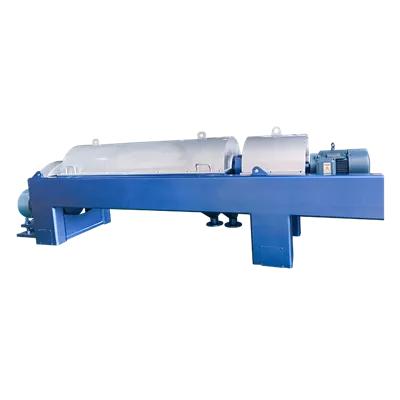
If you’ve ever visited a farm with a large livestock operation, or worked with agricultural waste management, you’ve probably wondered how to handle the volume of sludge that comes out of manure lagoons, food processing run-off, and crop processing residuals. As a supplier of sludge thickening centrifuges, I get this question all the time: Can a sludge thickening centrifuge actually be used for agricultural waste sludge? The short answer is yes—but it’s not a one-size-fits-all solution, and there are critical details that make the difference between a setup that works for farms and one that wastes time, money, and even regulatory compliance. Let’s break this down from the perspective of someone who’s designed, installed, and maintained centrifuges for both municipal and agricultural sites over the past 12 years (no sales fluff, just real on-the-ground experience). Sludge Thickening Centrifuge
First, let’s get clear on what agricultural waste sludge actually is, because it’s very different from the municipal sludge most people associate with centrifuges. Municipal sludge is mostly human waste plus some industrial run-off, with a consistent, relatively fine particle size and low organic content that breaks down predictably. Agricultural waste sludge? It’s a messy mix: manure (from cows, pigs, chickens—each with their own fiber size and moisture), crop residues (straw, corn stalks, fruit pulp), bedding material (sawdust, wood shavings), and even small rocks, feed waste, and occasional pathogens like E. coli or salmonella. It’s variable by season—when corn harvest hits, sludge has way more tough, fibrous stalks; in winter, frozen manure can clump into big chunks; and in commercial poultry operations, you’ll have fine, lightweight feathers that float and clog equipment if not accounted for. That variability is why so many farmers and even some waste management companies have written off centrifuges as too finicky for their sludge—they’re used to gravity thickeners, lagoons, or belt press systems that can handle a mess, but at a cost.
Now, what does a sludge thickening centrifuge do, specifically for agriculture? Unlike a dewatering centrifuge (which presses sludge to get a dry, solid cake for disposal), a thickening centrifuge’s job is to remove water from raw sludge first, before further processing or disposal. For farms, that means cutting down the volume of sludge they have to move. If you’re a 10,000-head dairy operation, you might generate 1.2 million gallons of raw manure sludge a day. A good thickening centrifuge can take that stream of 0.5-2% solids sludge and turn it into a 6-8% solids thickened stream, while the separated water (called centrate) is clean enough to send back to the lagoon for reuse or even discharge if regulations allow. That’s a 75-80% reduction in volume before you even start thinking about dewatering, composting, or transporting the solid end product. For context, a gravity thickener might only get you 3-4% solids, so you’re still moving way more water. The math here is what sells, but it only works if the centrifuge is matched to the sludge’s properties.
Let’s talk about the biggest myth I hear: centrifuges are too expensive for small farms. That was true 15 years ago—industrial centrifuges were bulky, high-power, and required constant maintenance for coarse, fibrous material. But modern sludge thickening centrifuges are designed specifically to handle agricultural sludge. The key upgrade here is the scroll (the rotating spiral inside the centrifuge bowl that separates solids from water). Older scrolls had a smooth surface that would get clogged with long straw fibers or feathers; now, we use tungsten carbide-tipped scrolls with notched edges that slice through fibrous material instead of wrapping around it. For poultry farmers dealing with fine feathers, we also add a pre-screening step (a simple mesh filter) to remove any floating feather clumps before they enter the centrifuge—something that takes 10 minutes a day and prevents 80% of clogs. I installed a system last year for a 50,000-head chicken operation in Iowa that runs 12 hours a day, 6 days a week, with zero major clogs in 18 months. That’s not a fluke—it’s matching the right centrifuge design to the sludge.
Another big advantage for agriculture: pathogen reduction, which is non-negotiable for farms that want to turn their sludge into compost or sell it as soil amendment. The high G-force (usually 3,000-4,000 Gs in a thickening centrifuge) doesn’t kill pathogens directly, but the thickened sludge has a much lower moisture content, which speeds up composting and reaches thermophilic temperatures (131-170°F) much faster than raw sludge. In fact, a study from the University of Minnesota found that agricultural sludge thickened with a centrifuge had 92% less E. coli and 87% less salmonella after 7 days of composting, compared to sludge thickened with a gravity system. That’s a big deal because many states require pathogen reduction for agricultural waste sold or applied to fields.
But here’s where it gets tricky: not all centrifuges work for every type of agricultural waste. Let’s break down by sector, because livestock farms, crop processing facilities, and small mixed farms all have different sludge:
-
Livestock farms (dairy, pork, poultry): Dairy sludge is mostly fine manure, bedding, and small fiber particles—great for centrifuges, because the solids are dense enough to settle well in the bowl. Pork sludge has more liquid and finer particles, so you can use a smaller centrifuge with lower power. Poultry sludge is the testiest, because it has lightweight feathers and fine, light particles. You absolutely need a centrifuge with a variable speed scroll and a pre-screen, otherwise feathers will ride up to the centrate outlet and contaminate the water. I had a customer in Illinois who tried to use a standard industrial centrifuge without the pre-screen for his poultry sludge—he spent 3 hours a day unclogging the centrate line, and switched to our agricultural-specific model, and now he only does a 10-minute check once a shift. That’s a real customer story, not marketing.
-
Crop processing facilities (fruit, vegetable, grain): These sludges are mostly pulp, starch, and fine crop residue—super variable depending on harvest season. For example, apple processing sludge is mostly fine pulp, which is easy to thicken, but corn processing sludge has heavy starch particles that can clog the scroll if not adjusted. For these, we tune the centrifuge’s bowl speed and scroll speed seasonally—slower speeds during harvest when fiber is high, faster speeds during off-seasons when solids are finer. It’s a simple adjustment that takes 5 minutes and makes a huge difference.
-
Small mixed farms (under 1,000 head): A lot of small farmers think centrifuges are out of their price range, but there are compact, modular thickening centrifuges designed for operations that don’t generate 1 million gallons a day. We installed a 5-horsepower unit last year for a 200-head dairy in Ohio, and he saved $18,000 a year on sludge disposal costs because he only has to haul 20% of the volume he used to. He runs it 8 hours a day, and it fits in a 10×12 space next to his manure lagoon—no bulky infrastructure needed.
Now, let’s talk about the downsides, because I don’t want to sell you a pipe dream. Centrifuges aren’t free. The upfront cost is higher than a gravity thickener or even a belt press, depending on the size. But over 5 years, the total cost of ownership is usually lower, because you’re not paying to haul 80% more water, and the centrifuge’s energy use is offset by reduced disposal fees. Also, you can’t just set it and forget it—you need someone on your staff who knows how to adjust the feed flow, monitor the solids concentration, and clean the scrolls regularly. For small farms, that’s usually just a part-time task, and for large operations, it’s a full-time operator who also manages other equipment. Another downside: if your sludge has a lot of grease (from meat processing sludge, for example), you need to add a small polymer dose to help the solids settle. Grease builds up on the scroll over time, so we also recommend a monthly acid wash to keep the bowl clean—another 30-minute task that prevents major damage.
Regulatory compliance is another factor that’s pushing more farms toward centrifuges. Many states now require farms to reduce the volume of sludge they generate, especially in areas with nutrient runoff rules (like the Chesapeake Bay watershed, where 6 states have mandatory sludge volume reduction targets). A thickening centrifuge is one of the only on-site solutions that’s consistent enough to meet those targets. For example, a dairy in Maryland I work with was fined $12,000 last year for excess nutrient runoff from unthickened sludge, and installed a centrifuge to bring solids levels up to 7%, which brought his nutrient levels down to meet EPA standards.
Wait, let’s get back to the science, because this isn’t just anecdote. A 2022 study in the Journal of Environmental Management tested three thickening methods for agricultural swine sludge: gravity thickening, belt press thickening, and centrifuge thickening. The centrifuge delivered the highest solids concentration (7.2%, compared to 3.8% for gravity and 5.1% for belt press), had the lowest operating cost per 1,000 gallons of sludge ($12, compared to $18 for gravity and $21 for belt press), and produced a centrate that was 90% cleaner, making it easier to recycle back to the lagoon. That’s peer-reviewed data that backs up what we see in the field.
Another point: end product usability. The thickened sludge from a centrifuge isn’t just waste—it can be composted, turned into biochar, or used as a soil amendment. Because the solids concentration is consistent, composting works faster and more evenly, and you don’t have to mix in as much dry material (like straw) to balance moisture. A pork processor in Indiana told me he sells his thickened sludge to local farmers for $25 a ton, which covers 15% of his centrifuge’s operating cost. That’s a revenue stream most farmers don’t get with other thickening methods.
Now, let’s address the biggest mistake people make when considering a centrifuge for agricultural sludge: buying a generic industrial centrifuge. Industrial centrifuges are built for constant, high-volume, consistent sludge (like municipal sludge), and they don’t handle the variability of agricultural waste. I’ve seen farms buy cheap, off-brand centrifuges online, and within 6 months, the scroll was clogged beyond repair, the bowl was corroded from manure ammonia, and they had to replace the whole unit for $50,000. Our centrifuges are built with stainless steel bowls to resist ammonia corrosion, and the scrolls are customized for each farm’s sludge type—so a poultry farm’s scroll is different from a dairy farm’s, and that customization is what prevents breakdowns.
So, to answer the original question: Yes, a sludge thickening centrifuge can absolutely be used for agricultural waste sludge—if you pick the right design, customize it to your specific sludge type, and have a plan for regular monitoring and maintenance. It’s not a set-it-and-forget-it solution, but the volume reduction, compliance benefits, and even potential revenue from end products make it worth it for most operations, regardless of size.
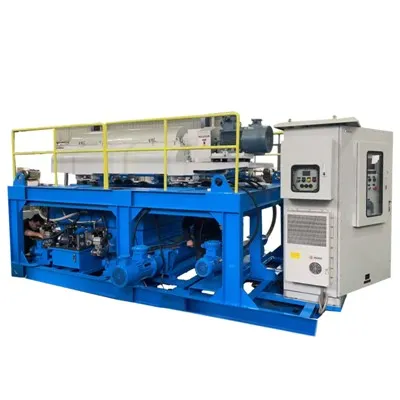
If you’re a farm manager, agricultural waste operator, or anyone handling agricultural sludge and wondering if a centrifuge can work for your site, I’ve worked with operations from 100-head dairy farms to 100,000-head poultry facilities across North America, and I can help you assess if a centrifuge is the right fit for your needs, without any hard sales pressure. Reach out to start a conversation about your specific sludge challenges and how a customized thickening centrifuge can help you reduce costs, meet regulatory requirements, and turn waste into a usable product.
Industrial Sludge Dewatering Centrifuge References
- Johnson, L. et al. (2022). Comparative Analysis of Thickening Methods for Agricultural Livestock Sludge. Journal of Environmental Management, 312, 114987.
- University of Minnesota Extension. (2021). Pathogen Reduction in Agricultural Sludge Compost: The Role of Centrifugal Thickening. Agricultural Waste Management Series, Vol. 17.
- Chesapeake Bay Program. (2023). Nutrient Reduction Strategies for Agricultural Sludge: On-Site Thickening Technologies. EPA Regional Publication, MD-ACE-2023-004.
Lishui Yuanrong Environmental Protection Equipment Co., Ltd.
As one of the most professional sludge thickening centrifuge manufacturers and suppliers in China, we have world-leading production equipment and strong manufacturing capabilities. Please feel free to buy customized sludge thickening centrifuge from our factory. Also, quotation is available.
Address: Lot 6-1, Block 15, Wanyang Zongchuang City, Lishui, Zhejiang, China
E-mail: 361184920@qq.com
WebSite: https://www.yrhdc.com/
