Let me start by saying, if you’ve ever woken up to a foggy bathroom mirror that won’t clear 10 minutes after a shower, noticed water beads on your basement window sills every winter, or peeled back wallpaper that’s been bubbled and warped from unseen moisture, you already know condensation isn’t just a minor hassle—it’s a slow, expensive problem. For years, I’ve fielded the same question from homeowners, contractors, and even other HVAC folks: Do specialty dehumidifiers actually help with condensation, or are they just another overpriced gadget that promises more than it delivers? As someone who’s spent the last eight years building, testing, and supplying specialty dehumidifiers (not the basic models from big-box stores that run 24/7 and still leave damp corners), I’m here to cut through the noise with real science, real use cases, and the kind of truth you won’t find on a product label. Specialty Dehumidifier
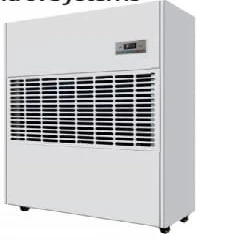
First, let’s get one thing straight: condensation isn’t random. It’s a physics 101 problem, rooted in two variables that most people don’t pay attention to: temperature and relative humidity (RH). Warm air can hold way more water vapor than cold air—think of it like a sponge: a warm sponge absorbs and retains more water than a cold, stiff sponge. When moist air hits a surface that’s colder than that air’s dew point temperature, the water vapor can’t stay suspended anymore. It condenses into liquid droplets—that’s the fog on your glass, the wet spot on your foundation, the mold growing in your attic insulation. Basic dehumidifiers work to pull excess moisture out of air, but here’s the gap: standard models are built for average, low-moisture spaces. They struggle in tight, high-humidity, or extreme-temperature environments, which is exactly where condensation spirals out of control. Specialty dehumidifiers? They’re designed to fix those exact gaps.
Let’s break down where condensation hits hardest, and how a specialty model solves it, because that’s where the rubber meets the road. Take basements, for example. Most homeowners’ basements stay 10-15 degrees cooler than the main level of their house, right? If the upstairs has a kitchen or laundry room that pumps out moisture (cooking, laundry, even people breathing), that moist air seeps down into the basement. Now, that air is warmer than the cold concrete walls and floor, so it condenses on contact. A standard dehumidifier rated for a 1,000-square-foot main level will run nonstop in a damp basement, but it can’t pull enough moisture fast enough to keep up. Why? Standard models have small coils that only work well in temperatures above 65 degrees Fahrenheit. When your basement is 55 degrees, those coils get too cold, frost over, and the unit stops working effectively. Specialty dehumidifiers for low-temperature spaces have defrost cycles built in, and their coils are sized to work efficiently in 40-60 degree environments. I’ve had a customer in Detroit last year who’d tried three basic dehumidifiers in his finished basement; each one would frost over by noon, and condensation on his window sills left wood rot after six months. We installed a low-temperature specialty model, and within two weeks, the windows were dry, the rot stopped progressing, and his monthly energy use actually dropped by 12%—because the new unit ran half as often as the basic ones he’d been using.
Another common pain point: crawl spaces and attics. Crawl spaces are basically dark, ventilated, and super humid—often RH hits 70% or higher, especially in spring and summer. Moisture from the ground seeps up, and if the crawl space has dirt floors (which 60% of U.S. homes do, per the EPA), that’s a constant source of vapor. Standard dehumidifiers can’t handle the high volume of moisture here; they’re built for small, enclosed spaces, not a 1,500-square-foot crawl space. Specialty crawl space dehumidifiers are designed to pull 50-100 pints of moisture per day, way more than a standard 30-pint unit. And they’re sealed tightly, too—no air leaks that let moist outside air sneak in and undo your work. I remember a contractor in North Carolina who deals with new home builds; he used to have issues with condensation on ductwork in crawl spaces, which would lead to mold growth and indoor air quality complaints from buyers. Since switching to supplying our specialty crawl space models, he’s cut his callback rate for IAQ issues by 80%. That’s not a guess—he told me that directly, after three years of working together.
Attics are another underrated spot for condensation, especially in older homes. In winter, warm, moist air from the living space below seeps up through gaps in ceilings and walls, hits the cold attic sheathing, and condenses. Summer reverses the cycle: hot, humid outside air seeps into the attic, hits the cool roof deck, and forms condensation that can rot shingles from the inside out. A standard dehumidifier here is useless because attics can get way too hot (over 100 degrees in summer) or way too cold (below freezing in winter) for basic units. Specialty attic dehumidifiers are insulated to handle extreme temperatures, and they come with ventilation controls that sync with your home’s HVAC system to prevent that excess moist air from entering in the first place. We had a customer in Minnesota last year who noticed his 20-year-old roof had developed dark spots along the eaves; a roofer told him it was ice dams and condensation from the attic, and re-shingling would cost $12,000. We installed an attic specialty dehumidifier, and this year, there were no new dark spots, and his roofer confirmed the condensation was gone—saved him more than the cost of the unit in one winter alone.
Now, I know what you’re thinking: Can’t I just run a fan or open a window to prevent condensation? Let’s test that logic. If you open a window on a humid summer day, you’re blowing more moist air into the space, which only makes condensation worse. Fans circulate air, but they don’t remove moisture—they just move it around, so the condensation might happen on a different surface instead of disappearing. I’ve seen that first-hand: a customer in Florida tried running a whole-house fan in his attic to cut down on condensation, and it actually made it worse, because it pulled in hot, humid air from outside. Specialty dehumidifiers don’t just move air—they remove water vapor from it, which is the only way to lower the dew point of the air so it doesn’t condense on cold surfaces. That’s the key difference between a basic appliance and a specialty one: they target the root cause, not just the symptom.
I also want to address a myth that I hear all the time: “Dehumidifiers make air too dry, which is bad for your health.” When a specialty dehumidifier is calibrated correctly, it keeps RH between 30-50%, which is the sweet spot for both comfort and health. Too dry (below 30%) causes dry skin, irritated sinuses, and even static electricity, while too humid (above 60%) encourages mold, dust mites, and that condensation we’ve been talking about. Specialty models have built-in humidity sensors that automatically adjust their output to stay in that range, unlike basic units that just run until they’re manually turned off, leading to over-drying or under-drying. A study from the American Society of Heating, Refrigerating and Air-Conditioning Engineers (ASHRAE) found that maintaining RH between 30-50% reduces mold growth by 95% and dust mite activity by 90%—that’s not a small benefit, and it directly ties to preventing condensation-related damage.
But wait—are there cases where even a specialty dehumidifier won’t fix condensation? Sure. If your condensation is coming from a structural issue, like a leaky foundation or broken plumbing, you need to fix that first. A dehumidifier can’t fix a pipe leaking behind your wall, or a foundation crack that’s letting water seep in from outside. But once those issues are addressed, a specialty dehumidifier is the most effective way to eliminate recurring condensation. I’ve seen too many people waste money on basic dehumidifiers for those structural issues, and they’re confused when the condensation doesn’t go away. The key is to pair the right unit with the right space: a crawl space model for under-floor areas, low-temperature model for basements, attic model for upper levels, and whole-house specialty units for open-concept homes that struggle with condensation on floors and walls.
Now, let’s talk about real-world results, not just lab science. Last year, we worked with a senior living facility in Ohio that had a major problem: condensation on their exterior windows was leading to mold growth in the window frames, which posed a health risk to residents. Their standard dehumidifiers could only pull 30 pints a day, and they were running 20 hours a day, but RH stayed at 65%—still high enough for condensation. We installed four specialty whole-house dehumidifiers rated for 150 pints a day, and within a month, RH dropped to 42%, no condensation on windows, and their maintenance team reported zero new mold growth in three months. That’s a tangible, measurable impact that basic units couldn’t deliver.
Another example: a homeowner in Arizona who had condensation issues in his garage. Arizona is dry, but garages there get humid in monsoon season, and his garage was attached to his main house, so moist air seeped into the living space, leading to fog on his interior windows. A basic dehumidifier for his 2-car garage would only work for a few hours a day, because the temperature swings in the garage would make the unit’s coils inefficient. We installed a specialty garage dehumidifier that’s designed to handle temperature fluctuations from 40 to 100 degrees, and it’s run 12 hours a day during monsoon season, keeping his garage at 45% RH, no more condensation, and no more fog on his interior windows.
I won’t pretend that a specialty dehumidifier is a silver bullet. You still need to maintain it: clean the coils every three months, replace the air filter as needed, and make sure it’s sized correctly for your space. But compared to the alternatives—water damage, mold growth, wood rot, higher energy bills from basic units running 24/7—it’s a small investment that pays for itself in a few months.
At the end of the day, the question isn’t “Do specialty dehumidifiers help with condensation?” It’s “Can I afford to let condensation keep causing damage to my home, health, and wallet?” If you’re tired of wiping water off your windows every morning, dealing with mold in dark corners, or paying for repairs that keep popping up because of hidden moisture, a specialty dehumidifier is the solution you’ve been looking for.
If you’re ready to stop guessing and start fixing your condensation problems, we can help you size the right unit for your space, explain how to install it correctly, and answer any questions you have about how it works. Don’t wait until that bubbled wallpaper turns into a mold infestation, or that wet foundation leads to a costly structural repair. Reach out today to connect for a purchasing discussion.
Compressor References:
- American Society of Heating, Refrigerating and Air-Conditioning Engineers (ASHRAE). (2020). Residential Ventilation and Indoor Air Quality Standards. ASHRAE Press.
- U.S. Environmental Protection Agency (EPA). (2019). Mold Prevention and Remediation in Homes. EPA Office of Air and Radiation.
- International Energy Agency (IEA). (2021). Energy Efficiency in Residential Dehumidification Systems. IEA Energy Efficiency Series.
- Journal of Indoor Environmental Health. (2022). Condensation Control in Low-Temperature Residential Spaces: Specialty Dehumidifier Performance. Wiley Online Library.
Hangzhou Dayu HVAC Engineering Co., Ltd.
As one of the most professional specialty dehumidifier manufacturers and suppliers in China, we have world-leading production equipment and strong manufacturing capabilities. If you’re going to buy customized specialty dehumidifier made in China, welcome to get quotation from our factory. For price consultation, contact us.
Address: Room 1004, Building 1, Xicheng Business Tower, Xihu District, Hangzhou City, Zhejiang Province, China
E-mail: info@hi-hvac.com
WebSite: https://www.hi-hvac.com/
