If you’ve ever worked with fasteners on a job site, in a machine shop, or even assembling a piece of furniture at home, you’ve probably reached for a screw nut without giving much thought to how it looks. Sure, some have a shiny, smooth finish, and others are dull, maybe a little rough or even slightly rusted if they’ve been sitting in storage. But how much does that surface finish actually matter? As someone who’s spent the last 12 years running a screw nut supply business, I’ve seen firsthand how a seemingly trivial detail can make or break a project, a product, or even a customer’s bottom line. Let me walk you through what I’ve learned—this isn’t just theoretical engineering talk; it’s the kind of on-the-ground experience that comes from solving real problems for the guys who depend on our fasteners every day. Screw Nut
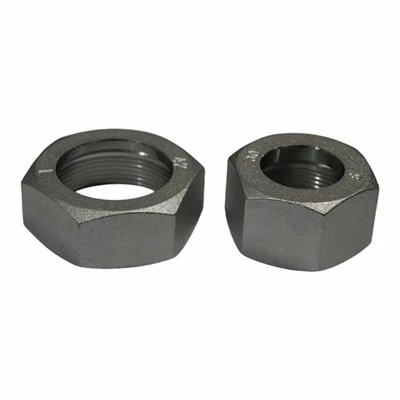
First, let’s get one thing straight: surface finish isn’t just about aesthetics. For a long time, I thought the same way. Early in my career, I supplied a batch of standard hex nuts to a small agricultural equipment maker who used them to attach blade guards to hay balers. They came back a week later, frustrated, saying the nuts kept backing off mid-operation. I checked our process—we’d run them through a basic zinc plating to prevent rust, which is standard for outdoor farm equipment. The finish looked smooth under a magnifying glass, but the customer had a different idea. They sent me a photo of the worn bolts and nuts, and when I held them up to the light, I could see it: the plating was too uniform, too slick. The smooth surface meant there was no friction between the nut and the bolt, no texture to create a micro-lock that would hold tight when the baler was shaking at 2,000 RPM. That was a wake-up call. I started digging into the science, and it turns out friction between two mating metal surfaces depends heavily on their surface roughness—or lack thereof. Surface finish measures the tiny peaks and valleys on a metal part, and those peaks act like tiny grippers that prevent slippage. Too smooth, and you get a lubricating effect, even without oil or grease. For high-vibration applications, that’s a disaster.
That agricultural customer switched to slightly rougher, unplased carbon steel nuts for their blade guards, and not a single one came loose in the next harvest. Since then, I’ve adjusted our inventory to include three standard surface finishes for most of our hex nuts: smooth zinc-plated (for indoor, low-vibration applications like furniture assembly), electro-galvanized with a light textured finish (for general construction, where vibration is mild), and hot-dip galvanized with a coarser, matte finish (for outdoor equipment, fencing, and bridge components). The difference might be invisible to the naked eye, but it’s the kind of detail that separates a nut that works and one that fails.
Beyond vibration resistance, surface finish plays a huge role in corrosion protection. Wait, you might be thinking—corrosion is about plating thickness or material, right? Not exactly. The way a finish is applied and its surface texture directly impacts how well a protective coating sticks. Let’s take our zinc-plated nuts, for example. If the plating is too smooth, it can start to flake or chip after just a few months of exposure to rain and humidity. Why? Because the smooth surface doesn’t give the zinc any edges to grip onto. It’s like trying to paint a polished table: the paint sits on top, not in the wood grain, so it peels off easily. If the surface has even a slight roughness—an Ra value (that’s the industry standard for measuring surface roughness, in microinches) of 10 to 20, instead of 5 or lower—the zinc plating bonds much tighter. We see this all the time with nuts used on highway guardrails. Those nuts have a specific rough hot-dip galvanized finish that ensures the coating doesn’t wear off when crews tighten them or when the guardrail slams into a car. Without that texture, the coating would wear away in a year, leaving the nut exposed to rust and eventually failing.
I’ve also worked with a manufacturer of commercial kitchen equipment, who told me they switched to our passivated stainless steel nuts. The passivation process removes free iron from the stainless steel surface, preventing rust, and a smooth, uniform finish is critical here. Wait, that seems to contradict what I just said. Why is smooth better here? Because commercial kitchens require easy cleaning. A rough surface can trap food particles, grease, and bacteria, which violates health codes. That customer’s old nuts had a slightly dull, machined finish that crevices trapped grease, leading to health inspectors flagging their equipment. When they switched to our mirror-like passivated stainless steel nuts, the smooth surface made cleaning a breeze, and they haven’t had a code issue in three years. So here’s the key: there’s no one-size-fits-all finish. It all depends on the application. A finish that’s perfect for one job will fail at another.
Let’s talk about another factor: torque and installation. How much force does it take to tighten a nut, and how consistently does it hold? Surface finish affects both. When you tighten a nut onto a bolt, part of the torque goes into stretching the bolt (which is what creates clamping force), and part goes into overcoming friction between the nut’s face and the clamped part, and between the nut’s threads and the bolt’s threads. If the finish is too smooth, less torque is lost to friction, which means you might think you’ve tightened it properly, but the bolt might not be stretched enough. That’s how loose nuts happen. If the finish is too rough, too much torque is lost to friction, so you might apply what feels like a lot of force, but the actual clamping force is too low, or worse, you can over-tighten the nut and strip the threads.
I remember a contractor who built a new office building downtown. He used smooth zinc-plated nuts for the steel beam connections, following the engineer’s specs. But when the steel erectors started tightening them, a number of nuts started spinning on the bolts. Turns out, the smooth finish meant the friction was so low that the torque wrench readings were off. We supplied a batch of lightly textured nuts, and the erectors reported that they tightened evenly, with no more spinning issues. That’s the kind of problem that costs contractors time and money—time is labor, and money is rework. For us, being able to adjust the surface finish solved that.
Another less obvious but important area: aesthetics. Maybe this seems trivial, but for industries where the fastener is visible, it matters a lot. Think about consumer electronics, outdoor furniture, or decorative metal fixtures. A smooth, uniform finish looks professional and polished, while a rough or inconsistent finish can make even a high-quality product look cheap. We supply nuts to a luxury outdoor furniture brand that sells to high-end homeowners. They specifically request a satin chrome-plated finish, which is smooth enough to look elegant, but has a very subtle texture that prevents the furniture’s nuts from slipping loose on the patio. If we offered a mirror finish, they said it would scratch too easily and show smudges. If we offered a rough finish, it would ruin the sleek look of their furniture. That’s why we keep close tabs on what our customers need—not just what the engineering specs say, but what their end users expect.
Now, let’s talk about common myths I’ve heard over the years. One old-timer at a trade show once told me, “Rougher is always better for strength.” That’s not true. Extremely rough finishes can act as stress raisers—places where metal breaks under tension. Imagine a mountain range with sharp peaks; if you pull that, the peaks will snap first. The same thing happens with a metal nut: too much roughness, and cracks start to form at the peaks, especially if the nut is being used in a high-stress application like aerospace or heavy machinery. Our team works with aerospace suppliers, who specify a very precise, smooth machined finish for their titanium nuts. Those nuts need to resist fatigue from repeated stress cycles, and a rough finish would shorten their lifespan dramatically. So that old rule of thumb? It’s wrong. It’s all about finding the right balance.
Another myth: “Plated finishes are all the same, so surface finish doesn’t matter for them.” I’ve seen so many customers come to us after buying cheap plated nuts online, only to have the plating peel off in a few months. The difference between a good plating and a bad one is often the surface texture. If the nut’s surface is too smooth, the plating can’t anchor, so it rubs off the first time you touch it. If the surface has the right roughness, the plating bonds so well that it takes a wire brush to scratch it. We test every batch of our plated nuts in our warehouse—we run a cross-hatch adhesion test, where we score the surface in a grid and tape it off, then pull the tape. If any plating comes off, the entire batch gets rejected. That’s not a test we have to do for smooth, but inconsistent, finishes; it’s one we do because we know how much it matters to our customers’ products.
So, what should you look for when choosing a screw nut’s surface finish? First, think about the environment it’s going to be in. Is it indoors or outdoors? High humidity, salt water, or dry? Salt water is especially tough—coastal construction or marine equipment needs a finish that resists corrosion, which means a rough, well-bonded galvanized or passivated finish. Then, think about the function: is it in a high-vibration area, like a farm machine or a car engine? You’ll want a slightly rough finish to prevent loosening. Is it a food service or consumer product? Smooth, easy-to-clean is key. Is it visible, like furniture or decor? A consistent, aesthetically pleasing finish is non-negotiable.
If you’re not sure, that’s where we come in. Over the years, we’ve worked with thousands of customers across every industry, from small farm shops to large aerospace manufacturers. We don’t just sell nuts; we offer advice based on what’s worked for similar projects. For example, if you’re assembling a backyard fence, our hot-dip galvanized nuts with a matte, slightly rough finish will hold up to rain, snow, and years of wind, no problem. If you’re assembling a bookshelf indoors, our smooth zinc-plated nuts will look neat and won’t loosen from mild vibration. If you’re working on a commercial kitchen appliance, our passivated stainless steel nuts with a smooth satin finish will meet health codes and resist corrosion.
I’ve seen too many projects go wrong because someone overlooked the surface finish. A construction project that’s delayed because nuts started rusting. A farm machine that broke down during harvest because a nut came loose. A commercial brand that lost customers because their furniture’s fasteners looked cheap. For us, as a screw nut supplier, that’s not acceptable. We don’t just ship parts; we ship solutions, and part of that solution is making sure every detail—including the surface finish—is right for the job.

Whether you’re a contractor, a manufacturer, a hobbyist, or anyone who depends on fasteners, the next time you reach for a screw nut, take a second to look at its finish. It might seem like a small thing, but it can make all the difference between a successful project and a costly failure. If you’re not sure which finish is right for your application, we’re here to help. Reach out to us to talk through your needs, get sample finishes, and find the perfect nut for your project.
Hydraulic Fittings References
- Surface Finish Fundamentals for Fasteners, Fastener Engineering Magazine, 2021.
- Corrosion Resistance of Plated Fasteners: The Role of Surface Texture, Journal of Materials Engineering and Performance, 2019.
- Friction and Loosening Mechanisms in Threaded Fasteners, SAE International Technical Paper, 2020.
- Surface Roughness and Stress Raising in Fastener Fatigue, International Journal of Fatigue, 2018.
- Hygiene and Surface Finish Requirements for Fasteners in Food Service Equipment, Food and Drug Administration (FDA) Guidelines for Manufacturing, 2022.
Yuyao Huiqiang Fluid Connectors Co., Ltd.
As one of the most professional screw nut manufacturers and suppliers in China, we also support customized service with low price. Please feel free to wholesale cheap screw nut in stock here from our factory. Welcome to view our website for more information.
Address: No. 102, Wenwei Road, Zhangting Town, Yuyao City, Ningbo City, Zhejiang Province
E-mail: huiqiangliuti@aliyun.com
WebSite: https://www.huiqiangfitting.com/
