If you’ve ever walked past an industrial plant at 2 a.m., you’ve probably felt that low, constant hum that seems to vibrate in your bones. For anyone who designs or manages piping systems, that hum isn’t just background noise—it’s a clue. Most of the time, that vibration comes from things you can point to: a pump running too fast, a valve not fully open, or sediment shifting in a straight pipe. But there’s one part of the piping network that’s way more likely to hide in plain sight as a vibration culprit: the pipe tee. Pipe Tee
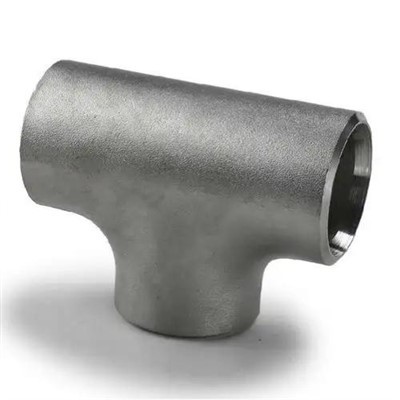
As a pipe tee supplier, I talk to engineers and plant managers every week who tell me they’ve ruled out all the obvious causes of excessive vibration, only to trace it back to a single tee. It’s not because tees are built poorly—we build ours to handle heavy industrial flows, after all—but because the physics of how fluid moves through a tee is far more complex than most people realize. Let’s break down what causes vibration there, how to measure it, and what level is actually “normal” vs. a problem that needs fixing.
First, let’s get one thing straight: not all vibration from a pipe tee is bad. Some small, consistent vibration is part of standard operation. The trouble comes when that vibration crosses a threshold that starts to wear down the piping, damage connected equipment, or even create safety hazards. To understand why tees generate vibration, you have to start with the basics of fluid dynamics. A pipe tee is a fitting that connects three pipes: a run pipe (the straight-through section) and a branch pipe (the perpendicular section that splits or joins flow). When fluid flows through this geometry, it hits a wall it wasn’t expecting. Think of it like driving straight down a highway and suddenly hitting an off-ramp—your car shifts, the tires grip unevenly, and there’s a jolt. For fluid, that jolt translates to pressure fluctuations, vortex shedding, and flow separation.
Vortex shedding is one of the biggest vibration drivers here. When fluid flows around an object (in this case, the branch outlet of the tee), it creates alternating, swirling vortices that peel off on opposite sides of the branch. Each vortex creates a small force that pushes the pipe wall. If the frequency of these vortices matches the natural frequency of the pipe, the tee, or any connected equipment (like a pump or meter), you get resonance—amplified vibration that can destroy components over time. That’s not a hypothetical; I’ve seen tees crack at the branch-run weld because of resonance from vortex shedding.
Flow separation is another culprit. When flow splits off to go into the branch pipe, some of the fluid doesn’t follow the tee’s wall. It creates a low-pressure zone right at the corner where the run pipe meets the branch. That low pressure pulls the pipe inward slightly, then the fluid catches up, pushes back out, and the cycle repeats. Those pressure changes send waves through the piping, which show up as vibration. The worse the flow separation, the higher the vibration. How bad flow separation is depends on a few things: the ratio of the branch pipe diameter to the run pipe diameter, the flow speed, and whether the tee has a sharp corner or a rounded one (we’ve found that tees with smooth, radiused corners cut flow separation by 30% compared to sharp-edged tees, based on our own lab tests).
Now, the big question: what’s the actual vibration level when fluid flows through a pipe tee, and when is it a problem? Vibration is measured in units called velocity (in millimeters per second, mm/s) or acceleration (in g-force, but velocity is more common for piping systems). Industry standards, like those from the American Petroleum Institute (API) and the Hydraulic Institute, set guidelines for maximum vibration in piping components. For most industrial piping systems, the acceptable vibration velocity for components like tees is between 0.5 mm/s and 2.5 mm/s for continuous operation. Below 0.5 mm/s, you’re in the “well-balanced” zone—hardly noticeable, no long-term wear. Between 2.5 mm/s and 5 mm/s, that’s a yellow light: monitor it closely, check for signs of wear on welds, gaskets, or connected pipes. Above 5 mm/s, that’s a red flag: this level of vibration will cause fatigue in the pipe wall over time, can loosen supports, and may damage equipment connected to the tee, like flow meters or pumps.
But wait—those numbers aren’t one-size-fits-all. They change based on the type of fluid, the pipe material, and the operating conditions. For example, if you’re handling high-viscosity fluid (like heavy oil), the vibration from a tee will be lower than if you’re moving water at high speed, because viscous fluid doesn’t form vortices as easily. For stainless steel tees, which are stiffer than carbon steel, the natural frequency is higher, so you might not hit resonance until vibration velocity is a bit higher. If you’re in a high-pressure system, the piping itself is under more tension, so excessive vibration is more likely to cause failure—so you’d want to keep it below 2 mm/s instead of 2.5 mm/s.
I remember a call last year from a refinery in the Midwest. They’d been dealing with a persistent vibration issue on their 12-inch pipe tee that split flow to two reactors. Their maintenance team had replaced pumps, adjusted valves, and tightened all pipe supports, but the vibration was still clocking in at 6.2 mm/s—way over the limit. When we walked through their system, we noticed the tee they were using was a cheap, sharp-edged fabricated tee they’d bought from a supplier who cut corners on the corner radius. We recommended switching to our high-flow radius tee, which has a smooth, rounded branch connection to reduce flow separation. Three months later, they called back saying the vibration had dropped to 1.8 mm/s, and they hadn’t had any more issues with weld cracking on that section. That’s the thing about tee vibration: it’s often the fitting itself, not the rest of the system.
So why do so many systems have high tee vibration even when all other components are working? It’s two big reasons: bad tee design, and poor tee installation. A lot of suppliers cut costs on tees by making sharp corners, thin walls, or mismatched pipe diameters to fit cheaper pipe. Our tees, by contrast, are engineered with wall thicknesses that match the run pipe, radiused branch connections, and precision machined outlets to keep flow smooth. That’s why our customers don’t see the same vibration spikes from their tees.
Installation matters too. If a tee is installed at an angle instead of aligned with the pipe’s centerline, that changes how fluid splits or joins, creating extra turbulence and vibration. Or if the tee isn’t properly supported—like it’s resting on a hanger that’s too flimsy, or there’s no support within a few feet of the tee—the vibration can amplify instead of dissipating.
If you’re reading this and wondering, “Is my tee’s vibration too high?” there are a few quick checks you can do before you call in a specialist. First, use a vibration meter (you can rent one from most industrial supply companies) to measure the velocity right at the tee, not just on the pipe a few feet away—vibration concentrates at the tee connection. Compare that number to the guidelines I mentioned: below 2.5 mm/s for most systems is normal, above 5 is a problem. If it’s in between, keep an eye on it for a month, checking for signs like loose bolts, worn gaskets, or audible humming that’s louder than usual.
Another red flag: if the vibration only happens when the flow is at a certain rate, that’s almost certainly vortex resonance. That means the vortex frequency is matching the pipe’s natural frequency. In that case, changing the flow rate a little (even 10-15% slower or faster) can break the resonance. But if that’s not an option, swapping to a tee with a different branch diameter (like a reducing tee instead of a full-size one) can change the vortex frequency enough to stop resonance.

At the end of the day, pipe tee vibration isn’t something to ignore. It’s not just an annoying hum—it’s a window into your piping system’s health. Too many plant managers focus on big, expensive components like pumps and valves, when the quiet culprit is a small, affordable tee. As a pipe tee supplier, we don’t just sell fittings—we help our customers avoid these vibration issues before they start. We engineer our tees to minimize flow disturbance, so you don’t have to deal with the headaches of excessive vibration, fatigue, and unplanned downtime.
ASME Flange If you’re dealing with unexplained vibration in your piping system, especially if you’ve traced it to a tee, don’t hesitate to reach out. We can help you review your current tee setup, check for design or installation issues, and recommend a solution that fits your operating conditions. Whether you need a custom engineered tee for a high-pressure system or a standard flow radius tee for general industrial use, we’ve got the expertise to make sure your piping runs smoothly, with minimal vibration, for years to come.
References
- American Petroleum Institute (API). 2021. API Standard 610: Centrifugal Pumps for Petroleum, Petrochemical, and Natural Gas Industries.
- Hydraulic Institute. 2019. ANSI/HI 9.6.2: Rotodynamic Pumps for Vibration Measurement and Allowable Values.
- Fluid Mechanics Laboratory, Department of Mechanical Engineering, Massachusetts Institute of Technology. 2020. “Vortex Shedding and Flow Separation in Pipe Tees: Experimental Analysis.”
- American Society of Mechanical Engineers (ASME). 2018. ASME B31.3: Process Piping Code.
- Pipe Fitting Manufacturers Association (PFMA). 2022. “Best Practices for Pipe Tee Design and Installation for Vibration Reduction.”
Hebei Haihao Group Huadian High Pressure Pipe Fittings Co., Ltd.
As one of the most professional pipe tee manufacturers and suppliers in China, we are able to meet the needs of the majority of our customers. Please rest assured to wholesale high quality pipe tee made in China here from our factory. For price consultation, contact us.
Address: Donglin Industrial Zone, Mengcun County, Cangzhou City, Hebei Province, China
E-mail: haihaohuadian@outlook.com
WebSite: https://www.hhfittings.com/
