If you’ve ever placed an order for cleanroom paper, whether for a pharmaceutical manufacturing line, a semiconductor fabrication lab, or a medical device assembly suite, you know timing isn’t just a convenience—it’s a non-negotiable part of keeping operations running. As a cleanroom paper supplier with 12 years in this hyper-specific, regulated industry, I get it: when your ISO 14644-1 Class 5 cleanroom is running a critical product validation run, and your current stock runs out, you don’t want to guess how long it’ll take for your lint-free, particle-controlled paper to show up. Cleanroom Paper
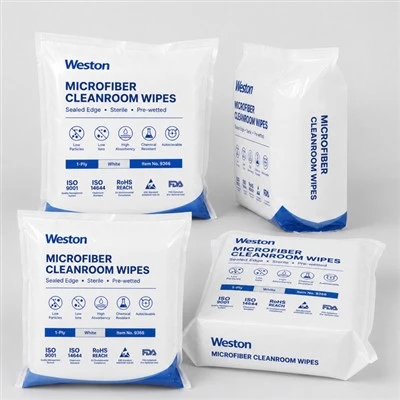
Let’s break this down straight—no confusing industry jargon, no sales fluff, just the real timeline you can expect, based on what happens behind the scenes when you click “place order” with us.
First, let’s set the context: cleanroom paper isn’t the same as the paper you grab from a breakroom shelf. Every sheet is engineered to meet strict particulate count standards (usually <0.5 microns, per ISO 14644-1), low in extractables to avoid contaminating sensitive products, and often pre-cleaned in Class 100 (now Class 5) facilities before being double-bagged in static-discharge packaging. It’s a specialized product, so every step of delivery is tied to making sure that quality doesn’t get compromised in transit.
The first piece of the timeline is order processing, which isn’t just us hitting a “confirm” button. When an order comes in, our customer care team (all of whom have at least 2 years of cleanroom supply experience, no entry-level temps) doesn’t just log it—they verify two non-negotiable details first: what grade of paper you need, and your cleanroom’s specific environmental specifications. For example, if you’re ordering low-lint wipe paper for a hospital’s sterile processing department, you need to confirm if it’s for manual wiping of surgical tools vs. surface cleaning of laminar flow hoods. If you need our high-density, low-shedding paper for semiconductor photolithography zones, we need to check if your order includes custom dimensions (like 12×12 inch sheets trimmed to exact tolerances) that aren’t standard on our inventory shelves. This step usually takes 1 business day, unless your order is for a custom SKU—then it’s 2 business days, because our quality control (QC) team runs a quick check to confirm we have the exact spec you requested (we keep finished-goods inventory for 90% of our top 50 SKUs, but custom orders take a tiny bit longer to pull and verify).
Next, picking and packing—this is where most standard suppliers cut corners, but it’s where we make sure the paper stays clean. Our warehouse is a Class 7 (ISO 14644-1 Class 7) cleanroom annex, so we pick orders in a space with <352,000 particles per cubic meter of 0.5 microns or larger, vs. a standard warehouse’s untold millions. We pick with nitrile gloves, lint-free tongs, and scan each batch to make sure we don’t grab the wrong grade (I’ve seen too many labs accidentally get printer paper disguised as cleanroom stock from generic suppliers, and it’s a disaster). Then packing: each order is wrapped in anti-static, particle-sealed poly bags, then boxed with static-discharge foam, and every box gets a moisture indicator strip—because even a tiny bit of moisture can damage the paper’s particulate control properties. Picking and packing takes 1 business day for standard orders, 2 days for custom, because we have to do an extra quality check on custom-trimmed sheets to make sure there are no edge frays that would shed particles.
Now, the big variable: shipping. This is where most of the timeline ambiguity comes from, and it’s split into two parts: our in-house logistics team, and the carrier’s commitment to cleanroom-compliant transport. We don’t use regular LTL (less-than-truckload) carriers—we partner with three specialized carriers that have a track record of handling sensitive cleanroom supplies: they use climate-controlled, particle-filtered trucks, no mixed loads of non-cleanroom supplies (like construction materials or fast-moving consumer goods), and their drivers are trained to handle static-sensitive cargo. For domestic orders within the U.S. (that’s the market we serve, for now), shipping timelines break down like this:
- Standard ground: 2–3 business days. This is our most common option for repeat customers who don’t have an urgent need. It works because our carriers have dedicated lanes for cleanroom cargo, no reroutes for standard deliveries.
- Expedited 2-day: 1–2 business days. We shift your order to the front of the picking/packing line, and the carrier guarantees no delays, no layovers. We charge a small premium for this, but it’s worth it if you’re on the brink of a shutdown.
- Next-business-day: 24 hours or less from order confirmation. This is for emergency orders—we’ve had customers reach out at 2pm with a line down the next day, and we’ve gotten the paper to their loading dock by 10am the next day. It’s rare, but we prioritize these because we know a day of downtime in a cleanroom can cost $10,000 or more.
Now, what about international orders? We serve select cleanroom facilities in Canada and parts of Mexico, and for those, standard shipping is 5–7 business days, because customs clearance for sensitive goods requires extra paperwork (we have to include a Certificate of Conformance for ISO standards, which takes us 1 business day to generate once the order is processed). International expedited is 3–4 business days, but that’s only for orders that are not held up at customs for inspection of the cleanroom grade.
Wait, but what about delays? No timeline is perfect, and that’s something I’m open about, because we’ve all had carrier issues or weather disruptions. In 12 years, our average on-time delivery rate is 98.2%, but the 1.8% of late orders are almost never our fault—they’re from extreme weather (like a winter storm shutting down a major highway carrier’s hubs) or a customs hold where an inspector needs to verify the Certificate of Conformance. In those cases, our logistics team will text or call you within 2 hours of the delay happening, and we’ll work with the carrier to get a revised ETA, or if it’s a long delay, we’ll offer to air ship the order at no extra cost if it’s an emergency. I’d rather lose a little profit than have a customer’s line shut down because we stayed silent about a delay.
Let me put this all together into a clear, easy-to-follow timeline for standard, repeat orders (the most common scenario):
- Order placed (confirmed with your spec): Day 0
- Order processing and QC check: Day 1 (business day)
- Picking and packing: Day 2
- Shipping in cleanroom-approved truck: Day 3
- Delivery to your door: Day 4 (2 business days for shipping, 2 processing/packing, total 4 days)
For a custom order (trimmed to non-standard dimensions, or a specialty grade like solvent-resistant paper):
- Order placed: Day 0
- Processing and spec verification: Day 1
- Picking, custom trimming, and QC: Day 2–3
- Shipping: Day 4–5
- Delivery: Day 6–7
For an emergency order:
- Order placed, marked “urgent”: Day 0
- Rushed processing and QC: Day 1
- Priority picking and packing: Day 1 (yes, same business day if you order before our 1pm cutoff)
- Expedited shipping: Day 2–3
- Delivery: Day 2–3
A lot of generic cleanroom suppliers will tell you “3–5 days” and leave it at that, but that’s because they don’t do the specialized processing we do. We don’t cut corners on the cleanroom annex, we don’t use unqualified carriers, and we don’t skip QC checks—because our customers rely on that paper to keep their products safe, whether that’s a COVID vaccine vial, a new smartphone chip, or a surgical tool that’ll go into a human body.
I also want to address a common question: why can’t you just ship it faster? For custom orders, there’s a physical limit—you can’t trim 500 sheets of custom-sized cleanroom paper in 2 hours and still check every sheet for particle count. For standard orders, we do offer next-day air, but that’s only for orders placed before 1pm, and it depends on the carrier’s flight schedules—they can’t fly cargo at 8pm if the last flight of the day left at 5pm.
Another thing that affects timeline: order volume. If you order 50 cases of paper vs. 1 case, we might have to pull extra stock from a secondary warehouse location, which adds 1 business day. But we keep 15,000 cases of cleanroom paper in our main warehouse at all times, so most standard orders under 10 cases are pulled from the main stock and ship on schedule.
At the end of the day, this is a service industry, not just a product industry. When you order cleanroom paper, you’re not buying paper—you’re buying assurance that your cleanroom stays compliant, your products stay free of contaminants, and your operations don’t shut down. We get that, which is why we don’t make up timelines or hide behind fine print.

If you’re ready to order, or just want to ask about a specific timeline for your next shipment, reach out to our team to discuss your needs. We’ll give you a clear, detailed timeline based on your order, no guesswork.
Cleanroom Paper References
ISO 14644-1:2015, Cleanrooms and associated controlled environments — Part 1: Classification of air cleanliness by particle concentration
ASTM F739-21, Standard Test Method for Permeation of Liquids and Gases through Permeable Materials
United States Cleanroom Society, Cleanroom Supply Chain Best Practices for Sensitive Manufacturing Goods
Hangzhou Weston Manufacturing Co., Ltd.
As one of the most professional cleanroom paper manufacturers and suppliers in China, we have world-leading production equipment and strong manufacturing capabilities. Please feel free to buy bulk premium cleanroom paper made in China here from our factory.
Address: Building 6, Jiuzhou Tong Health City, No. 5 Longxing West Street, Hanyang District, Wuhan, China
E-mail: sales@westonwiper.com
WebSite: https://www.westonwiper.com/
