If you’ve ever stood on a worksite watching a high-pressure hose leak mid-job—whether it’s powering a hydraulic jack on a construction truck, moving bulk chemicals through a processing plant, or driving a pressure washer on a multi-story building facade—you know how costly even a tiny seal failure can be. Down time, wasted material, safety risks, and that awkward scramble to patch a hose before the next shift kicks in? We’ve seen it all, and as a high-pressure hose supplier, our biggest job isn’t just selling hoses—it’s making sure you get the seal right, every single time. Let’s break this down like we do with our regular customers, no overly technical jargon, just practical, science-backed steps that actually work. High Pressure Hose
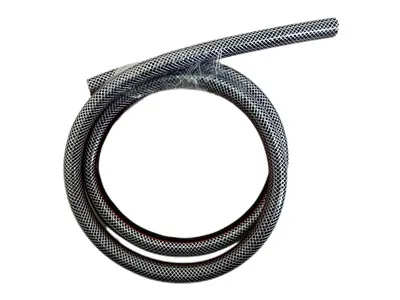
First, let’s start with the basics: what makes a high-pressure hose seal tight in the first place. It’s not just cranking on the fitting until it won’t turn anymore. High-pressure systems (we’re talking 1,000 PSI up to 60,000 PSI, depending on your application) rely on two key things: metal-to-metal interference at the fitting’s shoulder, and compression of the elastomeric seal ring that sits in the fitting’s recess. Skip either, and you’ll get a leak that starts small and turns into a bigger headache fast. I’ve seen contractors overtighten fittings so much they crack the hose’s outer cover or strip the fitting threads, all while still getting a leak because they crushed the seal ring too flat to hold pressure. Overtightening is just as bad as undertightening—if not worse, because it hides the leak under a layer of damaged parts, so you don’t catch it until the hose is under load.
Let’s move to step one that most people skip: pre-assembly inspection. Before you even touch a wrench, spend two minutes checking every part. First, inspect the hose itself. Look at the end you’re fitting: is the cut straight? A jagged, angled or uneven cut will leave a gap between the hose’s inner liner and the fitting, so even a perfect seal will leak. If you cut the hose yourself, use a hose-specific cutter (not a hacksaw, which frays the braid and bends the inner liner) and deburr the cut edge with a small file to remove any metal shavings—those tiny bits will nick the seal ring faster than anything else. Then check the fitting. Is the threading on the male end clean and free of burrs? Is the female fitting’s seating surface (the ring that the seal sits against) smooth and scratch-free? I once had a customer return a whole order of hoses because he had constant leaks, and it turned out his female fittings had tiny tool marks from the manufacturing process that were cutting the seals. Swapping those out fixed it instantly. Also, check the seal ring itself: if it’s a nitrile, EPDM, or Viton ring (the three most common for high-pressure use), make sure it’s not stretched, cracked, or flattened from sitting in a parts bin for too long. Even a small nick on the seal will blow out under pressure, so toss any damaged rings.
Next up: lube it right, but not too much. This is another common mistake. Some guys load the threads and the seal ring with thick grease, thinking it will help it slide on easier. Too much lube, especially petroleum-based grease, will dissolve certain seal materials (like some types of rubber) and create gaps that leak. Too little, and you’ll have to force the fitting on, which can twist the hose’s inner braid and weaken it before you even connect it. The rule we teach our customers is: use a small amount of compatible lube, just enough to make the threads glide, not pool. For most general hydraulic and water-based high-pressure hoses, a silicone-based or water-based lube works well. For chemical processing or extreme temperature applications, use the lube we recommend for the specific hose type (we always include this in our packaging slips, by the way). Never use petroleum-based lube on EPDM seals—trust me, I’ve seen a whole batch of hoses fail because a team used old engine grease instead of the right lube. It sounds trivial, but it makes a huge difference.
Now, the fitting connection itself. This is where a lot of people wing it, and that’s where the leaks start. First, hand-tighten the fitting until it’s snug—until you meet that slight resistance, not forcing it. If you use a wrench right away, you can cross-thread the male and female ends, which will destroy the threads and the seal before you even get pressure. Once it’s hand-tight, how much do you turn it? This is not a “one turn fits all” situation, which is what a lot of old school methods say. The correct number of turns depends on two things: the thread type (NPT, BSP, JIC, etc.—we label all our hoses with their thread specs so you don’t guess) and the hose’s pressure rating. For example, JIC fittings (used a lot in industrial hydraulics) require a specific amount of torque on the nut, not just turns, because the seal depends on the shoulder making full contact. NPT fittings (common for water and gas) usually need 1 to 1.5 turns past hand-tight, but only if the threads are clean and aligned. The key here is torque, not brute force. I recommend investing in a small, affordable torque wrench for high-pressure connections. For JIC 37-degree fittings, the torque specs go from 25 ft-lbs for a ¼” fitting up to 150 ft-lbs for a 1” fitting—we print these specs on every hose’s data sheet, right next to the pressure and temperature ratings. For NPT, the rule is to stop tightening once you feel a slight increase in resistance, then add the specified number of turns. If you don’t have a torque wrench, mark the fitting and the hose with a piece of tape at the hand-tight point, then turn the fitting the exact number of turns you need. Don’t guess.
Wait, and what about reusable crimp fittings vs. permanent crimp fittings? A lot of people ask us the difference, and how to get a tight seal with each. Permanent crimp fittings are the most common for high-pressure hoses, because they create a metal-to-metal bond between the fitting and the hose’s braid that’s stronger than the hose itself. The key here is using the right crimp machine and die for your hose size and fitting. If you under-crimp, the fitting will slide off under pressure; over-crimp, and you’ll crack the hose’s inner liner. We provide a crimp chart with every order that tells you the exact crimp diameter and machine pressure to use, and we even offer free training to any customer who buys 10 or more hoses from us—we’d rather take 30 minutes to show you how to use a crimp machine right than get a call about a batch of failed hoses later. Reusable fittings, which are for applications where you might need to disconnect and reconnect the hose often, require the same pre-inspection step, plus you have to make sure the ferrule (the metal ring that compresses the seal) is seated all the way before tightening. A common mistake here is not pushing the hose all the way into the ferrule before tightening, so when you do tighten it, the ferrule compresses the air instead of the seal.
Now, the post-connection test. You can connect a hose following all these steps, and still get a leak if you don’t test it properly. Don’t just hook it up and turn on the system at full pressure. First, pressurize it slowly, building up to 25% of your operating pressure, check for leaks, then go to 50%, then 75%, then full. That way, if there’s a tiny gap or a damaged seal, you catch it before it blows out. Also, check around the entire fitting, not just the top. Leaks often happen at the bottom or side of the fitting, especially if you cross-threaded it. If you do get a leak, don’t just crank on the wrench more—disconnect it, check the threads, check the seal, lube it properly, and reconnect. Cranking more won’t fix a bad thread or a damaged seal, it will just make it worse.
What about common mistakes we see over and over again that people don’t realize are causing leaks? First, mismatched fittings. Just because two fittings look the same doesn’t mean they are. A JIC ¾” fitting won’t work with a NPT ¾” fitting, even if the threads are the same size. Using the wrong adapter to connect different thread types is a common source of leaks, because adapters often have a small gap in the sealing surface. We always advise customers to use matching thread types where possible, or use adapters that are rated for their operating pressure—all our adapters are rated to the same pressure as our hoses, so you don’t have to worry about that. Second, not accounting for temperature and fluid type. If you’re using a high-pressure hose for hot oil (over 200°F), a nitrile seal will break down, so you need an EPDM or Viton seal. We label every hose with the compatible fluid and temperature range, so make sure you match your seal to your application, not just the hose size. Third, storing hoses wrong before use. If you leave a high-pressure hose coiled up for months, the seal can get deformed from being bent, which will cause leaks when you connect it. We recommend storing hoses at a loose coil (no tighter than 4 times the hose diameter) in a cool, dry place, not exposed to direct sunlight.
As a high-pressure hose supplier, our whole goal is to help our customers avoid these mistakes, because we know that a leaking hose isn’t just a hassle—it’s a safety hazard, and it’s bad for your business. We don’t just sell hoses; we provide technical support, free data sheets with torque and crimp specs, and even on-site training for large worksites. If you’re dealing with frequent seal failures, or you’re putting together a new high-pressure system and want to make sure every connection is tight from the start, we’d be happy to walk you through the process and help you pick the right hoses, fittings, and seals for your specific application. Don’t guess when it comes to high-pressure connections—small mistakes lead to big problems, and we’re here to help you get it right.
If you have questions about high-pressure hose connections, need a custom hose assembly, or want to learn more about our products, feel free to reach out to our team to discuss your needs.
Steel Wire Hose References:
- High Pressure Hose and Fitting Assembly Guidelines. Industrial Hydraulic Association, 2021.
- Seal Performance in High Pressure Hydraulic Systems. Journal of Fluid Power, Vol. 18, No. 2, 2017.
- Crimping Best Practices for Reusable and Permanent Hose Fittings. Hose Manufacturers Association, 2020.
- Compatibility of Elastomeric Seals with Industrial Fluids. Rubber Chemistry and Technology, Vol. 90, No. 3, 2017.
Weifang Xinzhiyuan Plastic Co., Ltd.
As one of the most experienced high pressure hose manufacturers and suppliers in China, we offer a wide range of products with superior quality. Please feel free to wholesale premium high pressure hose made in China here from our factory. We also accept customized orders.
Address: No. 700, Tongle Street, Economic Development Zone, Changle County, Weifang City, Shandong Province
E-mail: hua@xzypvchose.com
WebSite: https://www.pvchose-xzy.com/
