As the owner and lead estimator at a tunnel drilling rig supply and service company, I’ve spent the last 12 years on jobsites ranging from small municipal water line projects in Ohio to cross-border railway tunnels in Central America. I’ve seen firsthand how these machines, often called “mega drills” by the crews that run them, revolutionized underground construction—cutting timelines that once took years down to months, reducing worker exposure to hazardous conditions, and delivering far more precise tunnels than manual or traditional drill-and-blast methods. But over those years, I’ve also sat through more post-job debriefs than I can count where crews and project managers lamented the same, often unforeseen, limitations of these rigs. Today, I want to pull back the curtain on what those limitations actually are, not as a salesman pushing a product, but as someone who’s watched clients waste hundreds of thousands of dollars trying to force a rig into a job it wasn’t built for. Tunnel Drilling Rig
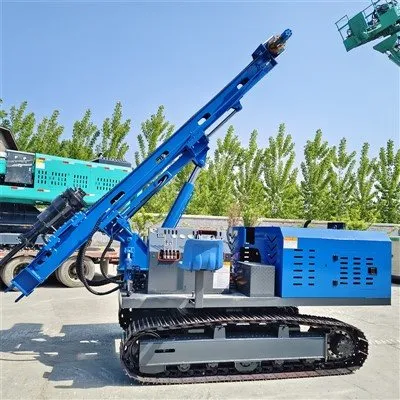
First, let’s get one thing straight: tunnel drilling rigs are not one-size-fits-all machines. That’s the biggest, most pervasive limitation we see as a supplier. When a project manager calls us mid-planning and says, “We need a rig for a 2-mile tunnel through hard rock in Colorado,” we first ask dozens of follow-up questions they almost never considered. What’s the exact compressive strength of that rock? Is it granite, gneiss, limestone—each behaves so differently under a drill head that a rig built for soft shale will snap bits in half trying to tackle unweathered granite. What’s the diameter of the tunnel? A rig built for a 12-foot sewer line won’t fit a 40-foot railway tunnel, and trying to jam a larger rig into a tight access portal is a disaster waiting to happen. Last year, we had a client in Pennsylvania rent a rig from a big-box equipment supplier that specialized in open-pit mining for their small 8-foot water line tunnel. The rig was 10 feet longer than the portal entrance, and they had to spend 3 days custom-building a temporary ramp to tip the rig at a 15-degree angle to squeeze in—costing them $28,000 in overtime and site modification fees before they even drilled a single foot. That’s avoidable, but so many projects underestimate how tightly a rig’s dimensions tie to site access and tunnel specs.
Next, there’s the elephant in the room: site preparation and ground condition risks that most small to mid-sized projects fail to account for. Tunnel drilling rigs, especially the hard-rock ones we supply, weigh anywhere from 50 tons to over 1,000 tons. They can’t just be set up on bare dirt or uncompacted gravel. We once had a client in West Virginia that skipped a geotechnical survey to save $12,000, opting to use the client’s “historical site data” from a 1970s surface excavation. The new tunnel was going through a layer of loose, saturated sandstone that the old survey didn’t note—soft enough that the rig’s 8 hydraulic outriggers sunk 18 inches into the ground on one side, throwing the drill head off alignment by 2 degrees. By the time crews corrected it, they’d drilled 20 feet of tunnel that was out of spec and had to be filled and re-done, adding $45,000 in labor and material costs. Even for projects that do surveys, there’s a hidden limitation here: rigs don’t handle variable ground well. One week you’re drilling through solid granite, the next you hit a fault zone of broken, waterlogged rock that makes the drill head bounce, leading to misaligned holes and wasted explosive placement if you’re using drill-and-blast, or collapsed tunnel walls if you’re using a tunnel boring machine (TBM) variant. Unlike handheld drills that can adjust on the fly, modern rigs are built to hold a consistent drilling trajectory, and sudden ground shifts throw that off exponentially.
Then there’s operational complexity and labor gaps that are rarely talked about. A new tunnel drilling rig doesn’t just require a crane operator or a general construction worker—we supply both on-site training for our rigs, and we still get clients calling us 6 months post-purchase saying they can’t find a certified operator. The average tunnel rig operator has 7 to 10 years of specialized training, and in the U.S., the Bureau of Labor Statistics projects a 8% gap in qualified heavy equipment operators for underground construction by 2027. Last quarter, we sold a mid-sized hard-rock rig to a contractor in Indiana that thought their existing crew “could pick it up in a week.” By week three, they’d burned through 12 drill bits (each costing $1,200) because the crew was too nervous to adjust the drilling speed and pressure for soft rock. The project fell 2 weeks behind, and the client ended up hiring a freelance operator from Chicago for $1,800 a day—more than double their original labor cost. It’s not just operating the drill itself, either: modern rigs are packed with sensors, GPS alignment tools, and telematics systems that require basic coding and digital literacy, something many older construction crews don’t have. We’ve had clients pay $5,000 for a software update they couldn’t install because their on-site tech didn’t know how to connect to the rig’s Wi-Fi. That’s a limitation that’s less about the machine itself and more about the human side of using it, but it’s just as critical a barrier to getting the rig to work as intended.
Power requirements are another overlooked limitation, especially for remote projects. Most people assume a tunnel drilling rig runs on standard grid power, but that’s only true if the jobsite is within a mile of a substation. Our largest hard-rock rigs draw up to 2,000 kilowatts of power—enough to run 100 average homes. If a project is in a rural area, like a mountain tunnel in Idaho or a mine expansion in northern Canada, you can’t just plug into a wall. You need a dedicated generator set, and not just any generator: a heavy-duty, low-emission diesel or hybrid generator that can handle the rig’s variable power draw, which spikes when the drill head hits hard rock and drops when it’s repositioning. Last year, we supplied a rig for a remote solar access tunnel in Utah. The client rented a standard 1,500-kilowatt generator from a local equipment company, and it couldn’t keep up with the rig’s power spikes. Every time the drill hit granite, the generator would drop power, causing the rig’s alignment system to shut down mid-drill, leading to 10 to 15 minutes of downtime every time it hit a hard rock layer. We ended up having to ship a custom 2,200-kilowatt generator to the site at a cost of $18,000 in shipping and setup fees, delaying the project by a week. For projects that try to avoid that cost, the result is reduced drilling efficiency, higher wear on the rig’s components, and missed project timelines.
Maintenance and downtime are also major limitations that we see crop up again and again. Tunnel drilling rigs are complex, high-stress machines that operate in harsh, dirty, underground environments. Drill bits, the cutting heads that actually bore through rock, need to be replaced every 20 to 50 feet in hard rock, and each bit change takes 2 to 4 hours—if everything goes right. We had a client in Montana that had to replace a drill bit every 12 feet because of misaligned drilling, adding 8 hours of downtime per day to their schedule. Even routine maintenance, like changing hydraulic filters, lubricating moving parts, and calibrating alignment sensors, requires specialized parts that are not always available on-site. If you’re drilling a tunnel in the remote Andes, a replacement sensor for the rig’s guidance system could take 2 weeks to ship from a parts supplier in the U.S. or Europe, leading to 2 weeks of zero drilling progress. And unlike smaller construction equipment that can be repaired by a local mechanic, tunnel rigs require technicians trained specifically on their make and model. As a supplier, we offer 24/7 field support, but we can’t be on-site for every rig we sell, and many contractors don’t budget for dedicated maintenance staff, leading to avoidable downtime that eats into project profits.
Last, there’s the cost barrier that’s hard to ignore for small to mid-sized projects. A new tunnel drilling rig can cost anywhere from $500,000 for a small, soft-rock rig up to $15 million for a large, hard-rock TBM variant. For a small municipality building a 1-mile sewer line, that’s a huge expense, and many clients opt to rent instead. But rental limitations are just as strict: most rental fleets don’t have specialized rigs for unique ground conditions, and rental rates are often $10,000 to $20,000 per week, plus fees for transport, operator time, and damage. Even for larger projects, total cost of ownership is often underestimated. We have a client that bought a mid-sized rig 5 years ago, and in that time, they’ve spent 30% of the original purchase price on maintenance, parts, and operator training. It’s a capital expense that requires long-term planning, not just a one-time purchase, and many project managers don’t account for that when budgeting.
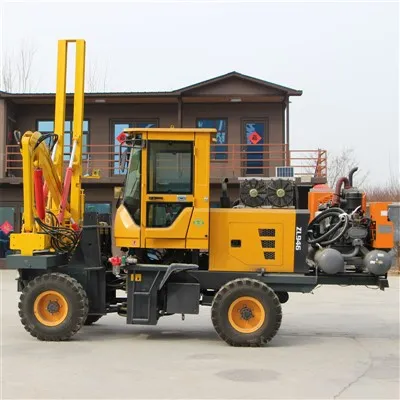
At the end of the day, tunnel drilling rigs are incredible tools that have transformed underground construction, but they’re not magic. They have clear, real limitations that stem from their size, their design for specific ground conditions, their reliance on skilled labor and power, and the harsh environments they operate in. As someone who’s been in this industry for years, my goal isn’t to sell a rig to anyone who calls, but to make sure our clients understand what they’re getting into before they make a decision. If you’re planning a tunnel project and want to talk through whether a rig is the right fit, what limitations to plan for, and how we can help you navigate those challenges, don’t hesitate to reach out to our team to schedule a consultation. We can walk through project specs, ground condition surveys, labor needs, and power requirements to make sure you’re not stuck paying for unforeseen costs down the line.
Solar Pile Driver References:
- Occupational Safety and Health Administration (OSHA). "Underground Construction Equipment Safety: Heavy Machinery Operation and Maintenance." 2022.
- Bureau of Labor Statistics, U.S. Department of Labor. "Heavy and Tractor-Trailer Truck Drivers and Construction Equipment Operators Occupational Outlook." 2023.
- American Society of Civil Engineers (ASCE). "Underground Construction: Challenges and Best Practices for Tunneling Projects." 2021.
- International Tunneling Association (ITA). "Tunnel Boring Machine (TBM) Capabilities and Limitations for Variable Ground Conditions." 2022.
- Construction Equipment Association (CEA). "Total Cost of Ownership for Heavy Underground Construction Equipment." 2023.
Jining Tongzhao Machinery Co., Ltd.
Jining Tongzhao Machinery Co., Ltd. is one of the most professional tunnel drilling rig manufacturers and suppliers in China, also supports customized service with low price. Please feel free to wholesale advanced tunnel drilling rig for sale here from our factory. Contact us for pricelist.
Address: 160 meters north of Hongxiang Road, east of Jiamei Road, Jining Economic Development Zone
E-mail: 13668674521@163.com
WebSite: https://www.cntzmachine.com/
