Hey there! I’m a supplier of transfer dies and tandem dies, and I often get asked about how the tonnage requirements for these two types of dies stack up. So, I thought I’d take a moment to break it down for you. Transfer Dies & Tandem Dies
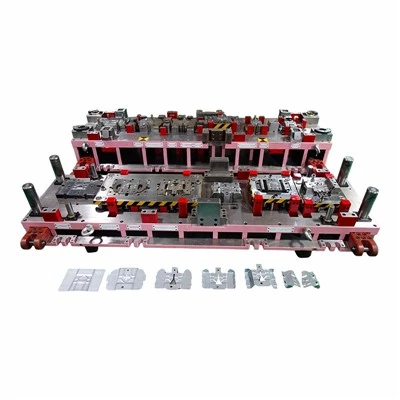
First off, let’s talk a bit about what transfer dies and tandem dies are. Transfer dies are used in a press where the workpiece is moved from one station to another using a transfer system. This allows for multiple operations to be performed on the workpiece in a single press stroke. Tandem dies, on the other hand, involve using multiple presses arranged in a line. The workpiece moves from one press to the next, with each press performing a specific operation.
Now, onto the tonnage requirements. The tonnage needed for a die is basically the force required to perform the stamping operations on the workpiece. It depends on a bunch of factors like the material type, thickness, the complexity of the part, and the size of the die.
Transfer Dies Tonnage Requirements
Transfer dies usually need a relatively high tonnage press. The reason for this is that they perform multiple operations in one stroke. You’re essentially doing a bunch of work all at once, so you need a powerful press to handle it.
Let’s say you’re working with a thick sheet of high – strength steel. This material is tough to form, and when you’re using a transfer die to perform operations like blanking, drawing, and piercing all in one go, you’re going to need a press with a high tonnage. The tonnage requirement can range anywhere from a few hundred tons to over a thousand tons, depending on the job.
Another factor that affects the tonnage for transfer dies is the size of the die. Larger dies typically need more force to operate. If you’re making a big automotive part, for example, the transfer die will be large, and you’ll need a press with enough muscle to move the die and form the part properly.
The complexity of the part also plays a huge role. If the part has deep draws or complex geometries, the transfer die will need more tonnage to form the part accurately. The press has to push the material into the right shape, and more complex shapes require more force.
Tandem Dies Tonnage Requirements
Tandem dies are a bit different when it comes to tonnage. Since the operations are spread out over multiple presses, each press doesn’t need to be as powerful as a press used for transfer dies.
Let’s take the same example of the thick high – strength steel. With a tandem die setup, the first press might be used for blanking, which doesn’t require as much force as drawing or piercing. So, this press can have a lower tonnage. The second press, which might be used for a simple drawing operation, will need a bit more tonnage, but still less than what a transfer die would need for the same overall operation.
The advantage of tandem dies in terms of tonnage is that you can match the tonnage of each press to the specific operation it’s performing. This can be more cost – effective because you’re not over – powering each press. You can use smaller, less expensive presses for the less demanding operations and only use larger, higher – tonnage presses for the more complex ones.
However, it’s important to note that the total tonnage across all the presses in a tandem die setup can still add up. If you have a long line of presses performing multiple operations on a complex part, you might end up using a significant amount of total tonnage.
Comparing the Two
When comparing the tonnage requirements of transfer dies and tandem dies, it really depends on the specific application.
For high – volume production of simple parts, the tonnage requirements for transfer dies might be on the higher side, but they can be more efficient in terms of cycle time. You can get a part out in one press stroke, which means faster production. Tandem dies for simple parts might not need as much tonnage per press, but the overall setup can be more complex and might have a slower cycle time.
For parts with very complex geometries, transfer dies can be a great option if you have a press with enough tonnage. They can handle all the complex operations in one go, ensuring a high level of accuracy. But if you don’t have a press with the required tonnage, or if you want to spread out the cost of the presses, tandem dies can be a better choice. You can use smaller presses for each step of the process, which can be more manageable.
In some cases, the choice between transfer dies and tandem dies based on tonnage also comes down to your existing equipment. If you already have a high – tonnage press, transfer dies might be a no – brainer. But if you have a collection of smaller presses, you can set up a tandem die system without having to invest in a huge, high – tonnage press.
Things to Consider
When deciding between transfer dies and tandem dies based on tonnage, there are a few other things you should keep in mind.
Maintenance is one factor. High – tonnage presses used for transfer dies can be more expensive to maintain. They have more powerful components that can wear out faster, and repairs can be costly. Tandem dies, with their smaller presses, might be cheaper to maintain, but you have more presses to take care of, which can add up in terms of time and labor.
Another thing is the floor space. High – tonnage presses for transfer dies are usually larger and take up more floor space. Tandem die setups can be more spread out, but they also require space for multiple presses and the transfer systems between them.
Conclusion
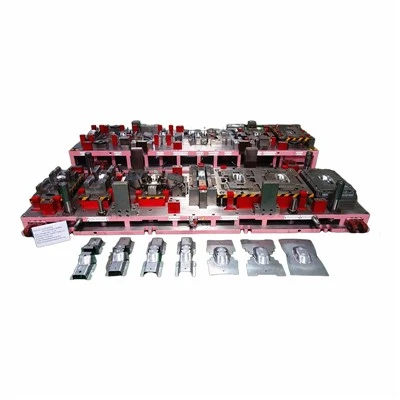
In conclusion, the tonnage requirements for transfer dies and tandem dies vary based on the part, the material, and the production volume. Transfer dies generally need a higher tonnage press because they perform multiple operations in one stroke, while tandem dies allow you to spread the tonnage requirements across multiple presses.
Metal Stamping Dies If you’re in the market for transfer dies or tandem dies and are trying to figure out the best option for your tonnage needs, I’d be more than happy to help. I’ve been in this business for a long time, and I can offer some expert advice based on your specific situation. Whether you’re looking to upgrade your existing setup or start a new project, I can work with you to find the right solution. So, don’t hesitate to reach out and let’s start a conversation about your die – stamping needs.
References
- Metal Stamping Handbook, various editions.
- Journal articles on die – stamping technology from industry – specific publications.
Dongguan Changdong Tool & Die Co., Ltd.
With abundant experience, we are one of the most reliable transfer dies & tandem dies manufacturers and suppliers in China. Please feel free to buy advanced transfer dies & tandem dies made in China here from our factory. Good service and quality products are available.
Address: No. 56-B, Fumin South Road, Dalang Town, Dongguan City, Guangdong Province, China
E-mail: sales@stamping-die.com
WebSite: https://www.metalstampingdie.com/
